Table of Contents
ToggleThe 1970s delivered shag carpets, avocado appliances, and enough wood paneling to outfit a national forest, but it also gave us warm, layered, personality-driven interiors that feel surprisingly fresh today. A 70s revival interior design approach isn’t about recreating a time capsule. It’s about borrowing the decade’s bold colors, organic shapes, and textured materials to add character and comfort to modern spaces. Done right, it delivers cozy, lived-in rooms with visual interest. Done wrong, it looks like a thrift store exploded. This guide walks through what defines the style, which elements work in today’s homes, and how to pull off the look without turning a living room into a disco basement.
Key Takeaways
- 70s revival interior design borrows warm colors, organic shapes, and textured materials from the 1970s to create personality-driven modern spaces without feeling like a time capsule.
- Earthy color palettes like burnt orange, mustard yellow, and deep teal work best when used as accent pieces or single feature walls paired with neutral backgrounds to avoid visual overload.
- Mix statement pieces such as velvet sofas or rattan headboards with contemporary elements, lighting, and art to keep 70s-inspired rooms feeling fresh and balanced rather than dated.
- Natural materials like velvet, rattan, teak, and terracotta tile are foundational to authentic 70s design and create tactile, layered interiors that feel lived-in and comfortable.
- Start with low-commitment updates like accent wall paint, lighting fixtures, or a single furniture piece before committing to a full 70s revival redesign.
- Avoid pattern-on-pattern density and matchy-matchy sets in favor of collected, eclectic looks that blend different wood tones and secondhand finds for true 70s aesthetic authenticity.
What Is 70s Revival Interior Design?
70s revival interior design pulls key aesthetic and material choices from the 1970s, earthy tones, curved furniture, natural textures, and a preference for warmth over minimalism, and adapts them for current homes. It’s not strictly retro or vintage: it’s a remix.
The original 70s style emerged as a reaction to the sleek, space-age vibe of the 60s. Homeowners wanted comfort, individuality, and connection to nature. That meant macramé wall hangings, rattan chairs, terracotta tiles, and lots of wood grain, often in darker stains like walnut or teak. Patterns leaned geometric or organic: think sunbursts, paisleys, and large-scale florals.
Today’s revival cherry-picks the good parts. It keeps the tactile richness and bold color but ditches the heavy drapes and wall-to-wall shag in harvest gold. The result feels eclectic, warm, and a little nostalgic without being costumey. It pairs well with mid-century modern pieces, boho accents, and even Scandinavian minimalism if balanced carefully.
Key Elements of 70s-Inspired Interiors
Color Palettes That Define the Era
The 70s color wheel ran hot and earthy. Burnt orange, mustard yellow, avocado green, chocolate brown, and rust were standard issue, often layered together in ways that sound chaotic but somehow worked. Accent colors included harvest gold, burnt sienna, and deep olive.
Modern interpretations tone down the intensity. Instead of painting all four walls in butterscotch, use it as an accent, one feature wall, a sofa, or cabinetry in a kitchen. Pair 70s hues with neutrals like cream, tan, or warm white to keep spaces from feeling dated. A rust-colored velvet chair against a soft beige wall hits the vibe without the visual overload.
Don’t skip the darker tones. Deep browns and teals ground a room and add sophistication. They work especially well in trim, built-ins, or as paint colors in smaller rooms like powder baths or reading nooks.
Furniture and Materials
70s furniture emphasized low-slung silhouettes, rounded edges, and organic shapes. Sofas sat close to the floor, often with wide arms and tufted cushions. Chairs came in sculptural forms, egg chairs, papasan chairs, and molded plastic shells.
Materials leaned natural and tactile:
- Velvet and corduroy for upholstery
- Rattan, wicker, and cane for chairs, headboards, and storage
- Teak, walnut, and oak for tables and cabinetry (often in darker finishes)
- Brass and chrome for lighting fixtures and hardware
- Terracotta, ceramic, and stoneware for planters and decor
Shag rugs were everywhere, usually in cream, rust, or brown. Modern versions in wool or synthetic blends offer the texture without the cleaning nightmare. Look for low-pile or medium-pile options if the full shag commitment feels too risky.
Wood paneling, the horizontal tongue-and-groove kind, was a hallmark. It’s making a comeback, especially when stained lighter or left natural instead of dark and glossy. Install it as a half-wall wainscot or accent feature rather than floor-to-ceiling coverage. Pair it with painted drywall for balance.
How to Incorporate 70s Design Without Overdoing It
Start with one or two statement pieces rather than a full-room overhaul. A curved velvet sofa in rust or a rattan headboard anchors the look without overwhelming the space. Let the rest of the room stay relatively neutral.
Mix eras intentionally. A 70s-style coffee table works great with modern lighting and contemporary art. The contrast keeps things fresh and prevents the room from feeling like a themed set. Blend textures, smooth plaster walls, nubby throw pillows, sleek metal frames, to add depth without clutter.
Limit pattern density. If the rug has a bold geometric print, keep upholstery solid or subtly textured. If the wallpaper goes full-on groovy, tone down everything else. The 70s loved pattern-on-pattern, but modern eyes usually need more breathing room.
Paint is the easiest low-commitment entry point. A single accent wall in terracotta or deep olive changes the mood instantly and costs under $50 in materials for a standard room (one gallon of quality paint covers roughly 350–400 square feet). If it doesn’t work, it’s a weekend fix.
Avoid matchy-matchy sets. The 70s aesthetic thrived on collected, layered looks. A mix of wood tones, secondhand finds, and DIY projects feels more authentic than buying a complete “70s collection” from a big-box store.
Use lighting to set the vibe. Arc floor lamps with brass or chrome finishes, globe pendant lights, and table lamps with ceramic bases were all 70s staples. Swap out builder-grade fixtures for vintage-inspired or thrifted originals. Dimmers help: the era loved warm, ambient lighting over bright overhead floods.
Room-by-Room Ideas for a 70s Revival Look
Living Room
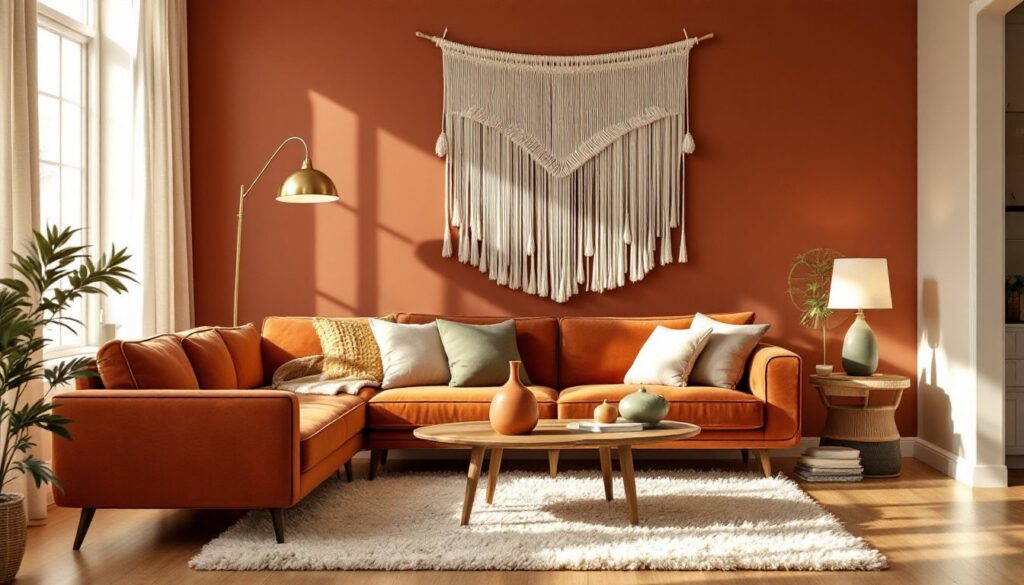
A low-profile sectional in velvet or corduroy sets the tone. Add a shag or high-pile area rug in cream or rust, a walnut coffee table with tapered legs, and floor cushions for extra seating. Hang a large macramé wall hanging or a vintage-style mirror with a sunburst frame. Swap standard curtains for linen drapes in a warm neutral or burnt orange. Install a dimmer on overhead lights and add an arc lamp in the corner.
Bedroom
Use a rattan or cane headboard, they’re widely available new or vintage and install like any standard headboard. Paint one wall in olive green or rust and keep bedding neutral with textured throws in mustard or terracotta. A ceramic table lamp with a sculptural base and a woven pendant light add warmth. If there’s room, a low dresser in teak or walnut with brass pulls completes the look. Avoid heavy drapes: opt for bamboo shades or simple linen panels.
Kitchen and Dining
This is where color and materials shine. Paint lower cabinets in deep teal or chocolate brown and leave uppers white or natural wood. Swap hardware for brass or bronze pulls. A terracotta tile backsplash (standard 4×4-inch or larger format) adds warmth and is relatively easy to install, figure on about $8–$15 per square foot for materials, more if hiring out.
For dining, look for a round tulip-style table or a wood table with chunky legs. Pair with mismatched chairs, some wood, some upholstered, maybe one rattan. Hang a globe chandelier or cluster pendant over the table. Add open shelving with stoneware dishes and vintage glassware in amber or green.
Bathroom
If doing a remodel, consider terracotta or earth-tone tile on floors or as a shower surround. Pair with white subway tile to keep it from feeling too heavy. Install a round mirror with a wood or brass frame. Swap out builder-grade fixtures for brass or matte black faucets and hardware. Add texture with woven baskets for storage and a small potted plant on the counter. If not remodeling, paint walls in a warm neutral and add 70s-style accessories, ceramic soap dispensers, a macramé plant hanger, brass towel bars.
Conclusion
70s revival interior design works because it prioritizes warmth, texture, and personality over sterile perfection. It’s forgiving, adaptable, and surprisingly practical for real homes. Start small, paint, lighting, a single furniture piece, and layer from there. The goal isn’t to replicate 1975: it’s to borrow the best parts and make them work for how people actually live today.