Table of Contents
ToggleEnglish interior design has shaped homes worldwide for centuries, blending comfort with refined aesthetics. This style isn’t about rigidly following period rules, it’s about creating lived-in spaces that layer history, craftsmanship, and natural materials into something welcoming yet sophisticated. From countryside cottages to urban townhouses, English design favors warmth over minimalism, pattern over plain surfaces, and collected character over showroom perfection. Homeowners looking to bring this enduring style into their own spaces don’t need estate-sized budgets or antique-hunting expeditions, just an understanding of what makes the look work and a willingness to build layers over time.
Key Takeaways
- English interior design prioritizes natural materials, layered textiles, and collected furnishings that blend comfort with refined aesthetics across centuries of architectural styles.
- Pattern and asymmetry define the style—florals, stripes, and plaids coexist harmoniously when they share similar color families, avoiding the minimalism of Scandinavian or strict symmetry of French design.
- Architectural elements like wainscoting, picture rail molding, and heritage paint colors create the foundation for English design without requiring period-perfect authenticity.
- Furniture should mix eras and styles rather than match exactly; a Chippendale chair next to a Georgian side chair creates the collected character that makes English interiors feel inherited and lived-in.
- Building English interior design gradually through quality pieces—a vintage rug, brass accessories, and linen textiles—costs less and creates more authentic results than rushed, complete room overhauls.
- English design develops over time and rewards patience; it differs distinctly from French country (lighter and symmetric), Scandinavian (minimalist), and modern farmhouse (trend-driven) through its darker, layered, and timeless approach.
What Defines English Interior Design?
English interior design is a broad tradition shaped by centuries of architectural evolution, from Tudor timber frames to Georgian symmetry and Victorian ornamentation. Unlike styles defined by a single decade or movement, English design pulls from multiple eras, favoring comfort, continuity, and subtle formality over trend cycles.
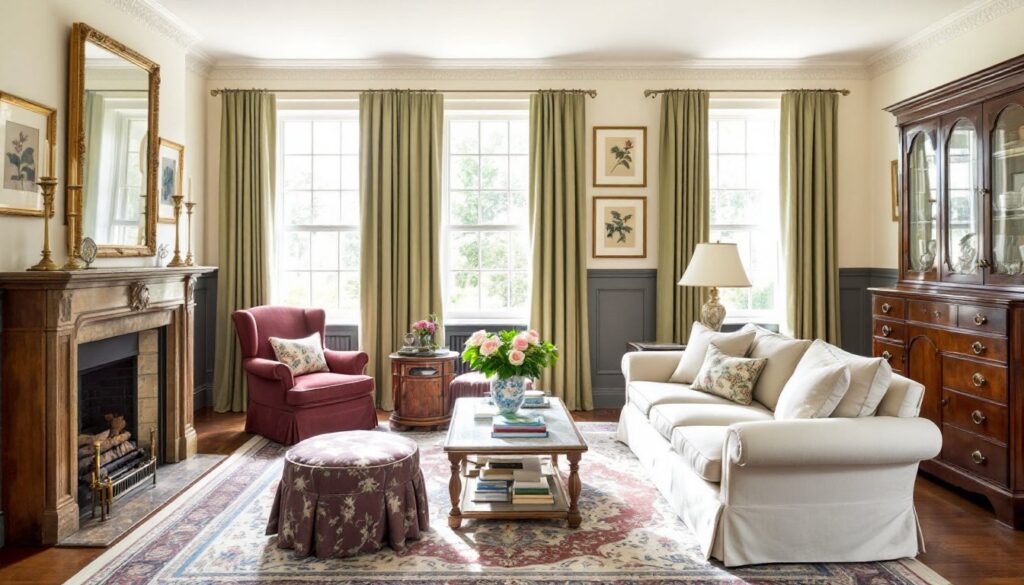
At its core, the style prioritizes natural materials, wood paneling, stone hearths, plaster walls, and wool or linen textiles. Rooms are often organized around functional focal points like fireplaces or large windows that frame garden views. Color palettes lean toward muted earth tones: sage greens, soft blues, warm creams, and deep reds, often accented with darker wood tones.
English interiors also embrace asymmetry and collected arrangements. Unlike French or Scandinavian design, which favor strict symmetry or minimalism, English rooms feel curated over generations. A wingback chair might sit beside a skirted ottoman, both flanking a marble-topped side table, nothing matches exactly, but everything belongs.
This style doesn’t demand period authenticity. Modern English design borrows the vocabulary, paneling, patterned fabrics, layered lighting, without slavish reproduction. A homeowner might install shaker-style wainscoting (typically 32–36 inches tall) painted in a heritage color, pair it with linen drapes, and anchor the room with a vintage Persian rug and contemporary seating. The result feels English without being costumed.
Key Characteristics of English Interior Style
Traditional Patterns and Textiles
English interiors are rarely plain. Florals, stripes, plaids, and toile appear across upholstery, wallpaper, and window treatments, often within the same room. The key is tonal coherence: patterns share a similar color family or scale, preventing visual chaos.
Chintz, a glazed cotton fabric with floral prints, became iconic in English country homes during the 18th century and remains a hallmark, though modern interpretations often skip the high gloss. Linen and cotton prints in botanical or damask motifs work for upholstery, throw pillows, and drapery. For wallpaper, William Morris-inspired designs with stylized florals or foliage bring immediate English character.
Textile layering extends to window treatments. English rooms favor floor-length curtains in heavyweight fabrics (velvet, wool blends, or lined linen), often paired with sheers or Roman shades underneath for light control. Curtain rods should be mounted 4–6 inches above the window frame and extend 3–4 inches beyond each side for proper proportion.
Rugs anchor pattern-heavy rooms. Persian, Aubusson, or needlepoint rugs in traditional motifs add color and warmth without competing with other textiles. Layering a smaller patterned rug over sisal or jute creates depth in larger spaces.
Antique Furniture and Layered Furnishings
English interiors mix furniture periods and styles rather than curating matched sets. A Chippendale dining chair might sit beside a Windsor or a Georgian side chair, all in the same room, all perfectly at ease. This collected feel suggests inheritance and history, even if pieces are reproductions or flea market finds.
Key furniture types include:
- Wingback chairs: Originally designed to shield sitters from drafts, now a symbol of English comfort.
- Roll-arm sofas: Deep-seated, often slipcovered in linen or cotton, built for lounging rather than perching.
- Case pieces: Breakfront cabinets, Welsh dressers, and secretaries in oak, mahogany, or walnut.
- Skirted tables and ottomans: Fabric skirts soften hard edges and add a tailored, traditional look.
Furnishings are layered in depth, not lined against walls. A sofa floats in the center of a room, flanked by side tables and reading lamps, with a console or bookcase behind it. This creates intimate conversation zones and allows rooms to feel inhabited.
Accessories matter as much as furniture. Brass candlesticks, porcelain vases, framed botanicals, and stacks of hardcover books fill surfaces without clutter. Open shelving displays transferware, silver trays, or pottery collected over time. The effect should feel curated but unstudied, like the homeowner simply lives well, not like they staged for a photo shoot.
How to Incorporate English Design into Your Space
Bringing English design into a home doesn’t require gutting rooms or sourcing antiques abroad. Start with architectural enhancements that establish the framework, then layer in furnishings and textiles.
Millwork and paneling anchor the style. Installing picture rail molding (typically placed 12–18 inches below the ceiling) or wainscoting adds dimension and historical reference. Beadboard or flat-panel wainscoting works in casual spaces: raised-panel styles suit formal rooms. Paint paneling and trim in off-white, sage, or Farrow & Ball-style heritage colors like Pavilion Gray or Pigeon.
For walls, consider wallpaper in one statement area, a dining room, powder room, or behind built-in shelving. Avoid covering every surface: English design uses wallpaper as accent, not armor. Alternatively, a soft neutral paint with a matte or eggshell finish provides a backdrop for layered textiles and art.
Lighting should feel residential, not commercial. Swap builder-grade fixtures for aged brass or bronze chandeliers, sconces, and table lamps. English interiors favor multiple light sources at varying heights, overhead pendants, wall sconces, reading lamps, and candles, creating warmth and flexibility. Dimmer switches (a simple DIY swap if wiring allows) let homeowners adjust mood.
Furnishings can be mixed:
- New upholstery in traditional silhouettes: A roll-arm sofa or skirted armchair in linen feels English even if it’s from a contemporary retailer.
- Vintage finds: Hunt estate sales or online marketplaces for wood furniture, mirrors, or brass accessories. Refinish or paint pieces to suit your palette.
- Textiles: Swap throw pillows and curtains before replacing large furniture. A floral linen pillow or plaid wool throw costs less than a chair but shifts the room’s character.
Finally, don’t rush. English interiors develop over time. Add one good piece, an antique mirror, a quality rug, a well-made armchair, and build around it. The style rewards patience and editing over instant transformation.
English vs. Other Classic Interior Styles
English design often gets lumped with other European or traditional styles, but key differences set it apart.
English vs. French Country: French interiors favor symmetry, lighter palettes (whites, soft grays, lavender), and rustic textures like exposed beams and lime-washed walls. English design leans darker and more layered, with richer colors and heavier textiles. French style feels airy and provincial: English feels grounded and collected.
English vs. American Colonial: American Colonial design borrows from English Georgian precedents but simplifies. Colonial interiors favor plainer paneling, less ornament, and utilitarian furniture (ladder-back chairs, trestle tables). English design is more decorative, with carved details, upholstered seating, and layered textiles.
English vs. Scandinavian: Scandinavian design prioritizes minimalism, light wood, and clean lines. Rooms are spare, with limited pattern and neutral palettes. English interiors embrace maximalism (in moderation), dark woods, and abundant pattern. Scandinavian spaces feel serene and uncluttered: English spaces feel warm and storied.
English vs. Modern Farmhouse: Modern farmhouse blends rustic and industrial elements, shiplap, metal fixtures, open shelving, with a neutral, Pinterest-friendly palette. English design skips the industrial nods, favoring traditional millwork, antique furnishings, and richer color. Farmhouse is casual and trend-driven: English is formal (even when relaxed) and timeless.
Understanding these distinctions helps homeowners avoid style drift. An English-inspired room shouldn’t feel French provincial or Scandinavian minimal, it should feel layered, warm, and confidently traditional.
Conclusion
English interior design offers a flexible, time-tested approach for homeowners seeking warmth, character, and livability. By prioritizing natural materials, layered textiles, collected furnishings, and thoughtful architectural details, anyone can bring this enduring style into their space, without needing a country estate or antique inheritance. Start with one room, build layers gradually, and let the space evolve. Done well, English design never feels finished, it simply feels like home.