Table of Contents
ToggleDesigning a two-bedroom apartment requires balancing aesthetics with function. Every square foot matters when square footage is limited, so the right design choices can make the difference between cramped chaos and a well-ordered home that feels twice its actual size. The good news? Smart planning beats sheer space every time. Whether someone’s furnishing their first rental or refreshing an apartment they’ve lived in for years, the strategies below help turn cookie-cutter floor plans into personalized spaces that work as hard as they look good. No gut renovations required, just intentional choices about layout, color, furniture, and purpose.
Key Takeaways
- Two-bedroom apartment interior design thrives on smart layout planning—measure your space, create scaled floor plans, and maintain traffic paths of at least 36 inches wide to avoid a cramped feeling.
- Define zones in open-concept living areas using area rugs, furniture dividers, and layered lighting at different heights to make your apartment feel more spacious and intentional.
- Adopt a cohesive color palette with neutral walls and 2-3 accent colors repeated throughout both bedrooms to create rhythm and visual unity across your apartment.
- Choose multi-functional furniture like storage ottomans, sleeper sofas, and platform beds with drawers to maximize every square foot without sacrificing style or comfort.
- Design your master bedroom for relaxation with soft colors and blackout curtains, while using the second bedroom flexibly for guests, a home office, nursery, or hobby space depending on your lifestyle needs.
Maximize Space With Smart Layout Planning
Before moving a single piece of furniture, measure the apartment. All of it. Use a 25-foot tape measure and note ceiling height, window placement, door swing direction, and the location of outlets and HVAC vents. Most renters skip this step and regret it when a sofa blocks the only floor outlet or a bed won’t fit without covering the closet door.
Draw a scaled floor plan, graph paper works, or use free tools like RoomSketcher. Mark permanent fixtures: radiators, built-in shelving, columns. Then identify traffic paths. The main walkway through any room should be at least 36 inches wide: tighter than that and it feels like navigating an obstacle course with a laundry basket.
Next, map furniture to function, not tradition. If the living room is narrow, a loveseat plus two chairs often flows better than a standard three-seat sofa. If the dining area is tight, consider a 30-inch round pedestal table instead of a rectangular one, no corner legs means easier movement around it.
Float furniture away from walls when possible. A sofa placed 12 to 18 inches from the wall with a console table behind it creates usable surface area and makes the room feel less like a waiting room. Anchor arrangements with area rugs: 8×10 feet for living rooms, 5×7 feet under dining tables. Rugs define zones and give the eye a boundary, which paradoxically makes spaces feel larger.
Create Defined Zones in Open-Concept Living Areas
Open floor plans maximize light and sightlines, but without definition they read as one big, unfinished box. The fix is visual zoning, using furniture, lighting, and materials to carve out distinct areas without building walls.
Start with area rugs. A rug under the sofa and coffee table signals “living room,” while a separate rug under the dining table marks “dining area.” Make sure rugs don’t touch or overlap: leave at least 18 to 24 inches of bare floor between them.
Use furniture as subtle dividers. A bookshelf perpendicular to the wall, a console table behind the sofa, or a bench at the end of a rug all create implied boundaries. Open shelving works especially well, it divides space without blocking light or airflow.
Change the lighting in each zone. Overhead fixtures work for dining areas: a pair of table lamps or a floor lamp with a three-way bulb suits living spaces. Task lighting, like a swing-arm lamp over a reading chair, adds another layer. Different light sources at different heights make each zone feel distinct even when they’re only a few feet apart.
Paint or accent walls can help, too. A single wall painted in a deeper shade (two steps darker on the same paint strip works well) behind the dining table or sofa gives weight and separation without closing off the room. Just keep the ceiling and adjoining walls the same lighter color to preserve the open feel.
Choose a Cohesive Color Palette Throughout
A two-bedroom apartment isn’t large enough to support wildly different color schemes in each room. A cohesive palette ties the space together and makes it feel intentional rather than haphazard.
Start with a neutral base: white, warm gray, greige, or soft beige on the walls. Most apartments come with builder white anyway, and unless the lease allows repainting, working with what’s there saves time and deposit risk. If painting is allowed, choose a shade with an LRV (Light Reflectance Value) of 50 or higher, these reflect enough light to keep compact rooms from feeling dim.
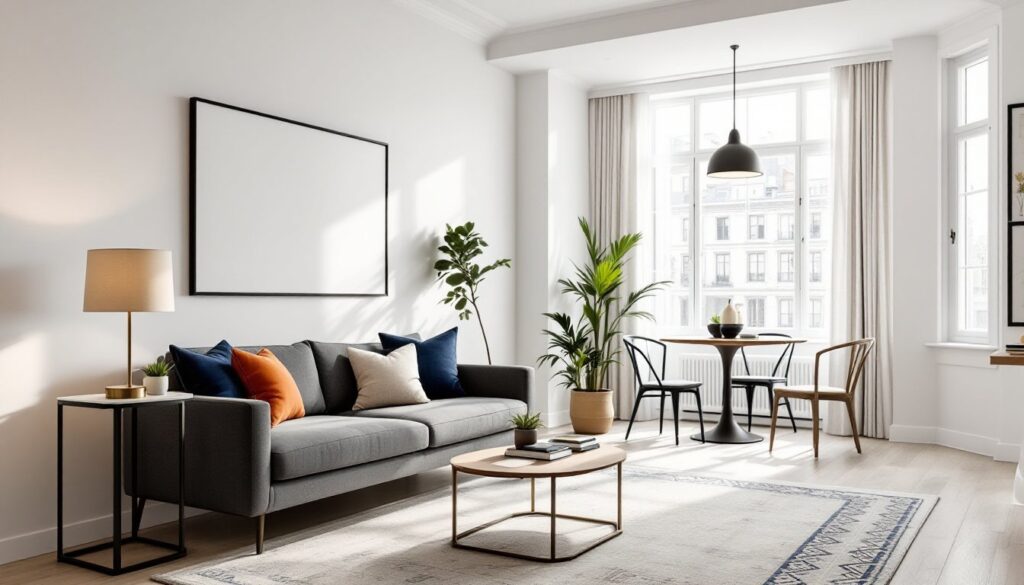
Layer in two to three accent colors and repeat them across rooms. For example: warm gray walls throughout, with navy blue, burnt orange, and natural wood as accents. Navy pillows in the living room, navy curtains in the master bedroom. Orange throw blanket on the sofa, orange lamp base in the second bedroom. Wood coffee table, wood nightstands, wood picture frames. The repetition creates rhythm.
Limit bold color to items that are easy to swap out: throw pillows, artwork, rugs, bedding. Sofas and dining tables are investments: they should be neutral enough to survive a future color-scheme pivot.
Pay attention to undertones. Grays can lean blue, green, or purple depending on the light. Test paint samples on at least two walls, one that gets morning sun and one that doesn’t, and live with them for a few days. The wrong undertone can make a room feel cold or muddy, especially in apartments with limited natural light.
Incorporate Multi-Functional Furniture Solutions
Multi-functional furniture isn’t a compromise, it’s a force multiplier in apartments where space is at a premium. The key is choosing pieces that serve double duty without looking like they’re trying too hard.
Storage ottomans are the workhorses. They provide seating, a footrest, hidden storage for blankets or games, and a tray on top turns them into a coffee table. Look for ones with removable lids and a solid base, particleboard collapses under repeated use.
Sofa beds and sleeper sofas have improved dramatically. Modern designs ditch the metal bar in the back and use memory foam mattresses. A queen sleeper fits most living rooms and handles overnight guests without converting the second bedroom into permanent guest quarters. Measure doorways before ordering, most sleepers are delivered assembled, and a 32-inch doorway won’t accept a 36-inch sofa arm.
Extendable dining tables adapt to need. A 36×48-inch table seats four daily, extends to seat six or eight when family visits. Drop-leaf and butterfly-leaf designs store the extension inside the table, so there’s no hunting for the extra piece in a closet.
Platform beds with built-in drawers reclaim the dead zone under the mattress. They’re especially useful in apartments with minimal closet space. Look for solid wood or plywood construction: MDF sags and doesn’t hold screws well if the bed gets disassembled and moved.
Wall-mounted desks fold down when needed and tuck up when not. Pair one with a stool that slides under for a compact home office setup in a corner of the living room or second bedroom. Make sure it’s anchored into wall studs, not just drywall, particularly if it’ll hold a monitor or laptop.
Design Each Bedroom With Purpose and Style
The two bedrooms in an apartment rarely get equal treatment, but both deserve intentional design based on how they’ll actually be used.
Master Bedroom Retreat Ideas
The primary bedroom should prioritize rest and calm. Keep the color palette soft, muted blues, greens, taupes, or warm grays all encourage relaxation. Save energizing colors like red or bright yellow for other rooms.
Invest in blackout curtains or cellular shades, especially if the bedroom faces east or a streetlight. Poor sleep wrecks everything else. Curtains should be mounted 4 to 6 inches above the window frame and extend several inches past each side to block light bleed.
Size the bed to the room, not aspirations. A king bed in a 10×12-foot bedroom leaves almost no floor space for nightstands or dressers. A queen fits most master bedrooms comfortably, with room for 24-inch nightstands on each side and a 3-foot walkway at the foot.
Use vertical storage to maximize closet space: double hang rods for shirts and pants, shelf dividers for sweaters, over-door hooks for bags or robes. If closet depth allows, slim velvet hangers save about 50% more rod space than plastic or wooden ones.
Second Bedroom Versatility Options
The second bedroom is where flexibility matters most. It might be a guest room, home office, nursery, hobby space, or all of the above depending on the week.
For a guest room/office combo, position a desk and a daybed or futon along opposite walls. The daybed functions as seating during work hours and a sleeping surface when needed. Add a room divider or curtain track if video calls require a clean background without a bed in the frame.
For a nursery that converts to a kid’s room, choose furniture that grows with the child. A convertible crib becomes a toddler bed, then a daybed. A dresser with a removable changing tray on top remains useful for years. Avoid overly themed decor, kids’ tastes change fast, and a jungle mural becomes a repainting project when they’re into space.
For a dedicated hobby or fitness space, skip the bed entirely. Wall-mounted fold-down tables work for sewing, painting, or model building. Rubber interlocking gym tiles (typically 2×2 feet, about ½-inch thick) protect floors under weights or equipment and reduce noise transfer to neighbors below.