Table of Contents
ToggleA well-designed church interior does more than look beautiful, it shapes worship, strengthens community, and honors the sacred. From grand cathedrals to small modern church interior design projects, every element serves both function and spirit. Thoughtful choices in seating, acoustics, lighting, and color create spaces where congregations feel connected, welcomed, and inspired. Whether planning a complete renovation or refreshing key features, understanding the core principles of church interior design helps stewards and committees make decisions that honor tradition while meeting contemporary needs. This guide walks through the essential elements every church should consider.
Key Takeaways
- Church interior design shapes worship experiences and community connection by balancing functional flexibility with sacred atmosphere through thoughtful choices in seating, acoustics, lighting, and color.
- Modern church interior design must prioritize accessibility, clear sightlines, and intuitive wayfinding to welcome first-time visitors while serving diverse congregations with varied worship styles and community events.
- Acoustic performance is critical—control reverberation time, use soft materials for absorption, and employ professional sound reinforcement systems to ensure clear communication of sermons and music throughout the space.
- Layered lighting with dimmers, warm color temperatures (2700K–3000K), and strategic accent lighting create emotional tone and visual hierarchy without harsh overhead glare that distracts worshipers.
- Successful renovations require congregational input, experienced design professionals familiar with worship spaces, phased planning to spread costs, and realistic budgets with 15–20% contingency for unexpected issues.
- Natural materials like solid wood and stone provide lasting durability and warmth, while reversible design choices such as movable screens and flexible lighting tracks preserve historic fabric and future flexibility.
Why Church Interior Design Matters More Than Ever
Churches today serve diverse congregations with varied worship styles, programs, and community outreach. The physical environment directly impacts how people experience faith, gather for worship, and connect with one another.
Functional flexibility ranks high in modern church design. Many congregations host weekday events, community meals, youth programs, and concerts alongside traditional services. The interior must adapt without compromising the sanctity of the space. Movable seating, modular platforms, and adjustable lighting systems allow one room to serve multiple purposes throughout the week.
First-time visitors form impressions within seconds of entering. A cluttered narthex, poor lighting, or uncomfortable seating can distract from the message and ministry. Clean sightlines, intuitive wayfaring, and welcoming aesthetics communicate care and professionalism. Small modern church interior design emphasizes simplicity and warmth, stripping away excess while preserving reverence.
Acoustic performance affects every spoken word and musical note. Hard surfaces create echoes that muddy speech: inadequate sound reinforcement leaves back rows straining to hear. Design choices made during renovation, flooring material, ceiling treatments, wall finishes, determine whether a space supports clear communication or fights against it.
Essential Elements of Sacred Space Design
Every church interior balances symbolic meaning with practical function. The focal point, altar, pulpit, or stage, anchors the visual hierarchy. Positioning this element requires thoughtful consideration of sightlines, accessibility, and theological emphasis. Traditional liturgical churches center the altar: contemporary spaces may elevate a platform for worship bands and multimedia.
Natural materials carry inherent warmth and permanence. Solid wood pews, stone flooring, and wrought iron fixtures age gracefully and withstand decades of use. When budgets allow, investing in quality materials pays long-term dividends compared to synthetic alternatives that show wear quickly.
Architectural details like ceiling height, window placement, and entry transitions shape the worshiper’s journey. High ceilings evoke transcendence: intimate side chapels offer quiet reflection. Narthex spaces serve as thresholds, giving congregants a moment to transition from everyday life to sacred time.
Accessibility compliance isn’t optional. The Americans with Disabilities Act (ADA) sets clear standards for ramps, door widths, accessible seating, and restroom facilities. Beyond legal requirements, true hospitality ensures everyone, from parents with strollers to elderly members with walkers, can navigate the space with dignity.
Balancing Tradition and Contemporary Worship Needs
Many congregations wrestle with honoring heritage while embracing change. Historic buildings carry stories, craftsmanship, and identity that members cherish. Renovations must respect this legacy while addressing current needs.
Reversible changes protect historic fabric. Installing movable screens for projection instead of permanently mounting equipment preserves original walls. Adding contemporary lighting on flexible tracks avoids damaging plaster or wood. Consulting preservation specialists before altering landmark buildings prevents costly mistakes and maintains eligibility for restoration grants.
Liturgical traditions influence design differently than non-denominational contemporary worship. Some congregations require kneelers, processional aisles, and communion rails: others prioritize stage space for bands, cafe-style seating, and video walls. Neither approach is superior, the design must align with how the community actually worships, not aspirational models borrowed from elsewhere.
Color Psychology and Lighting in Worship Spaces
Color sets emotional tone instantly. Deep blues and purples convey contemplation and royalty: warm golds and creams suggest welcome and joy. Churches often use liturgical colors, purple for Advent and Lent, white for Easter and Christmas, green for ordinary time, in textiles and banners, but permanent finishes require more neutral palettes that support seasonal changes.
Wall colors should enhance rather than compete. Soft whites, taupes, and warm grays provide backdrops that let architectural details and artwork stand out. High-contrast accent walls work in contemporary designs but can feel jarring in traditional spaces. Test paint samples under both natural daylight and artificial lighting before committing: colors shift dramatically depending on light source.
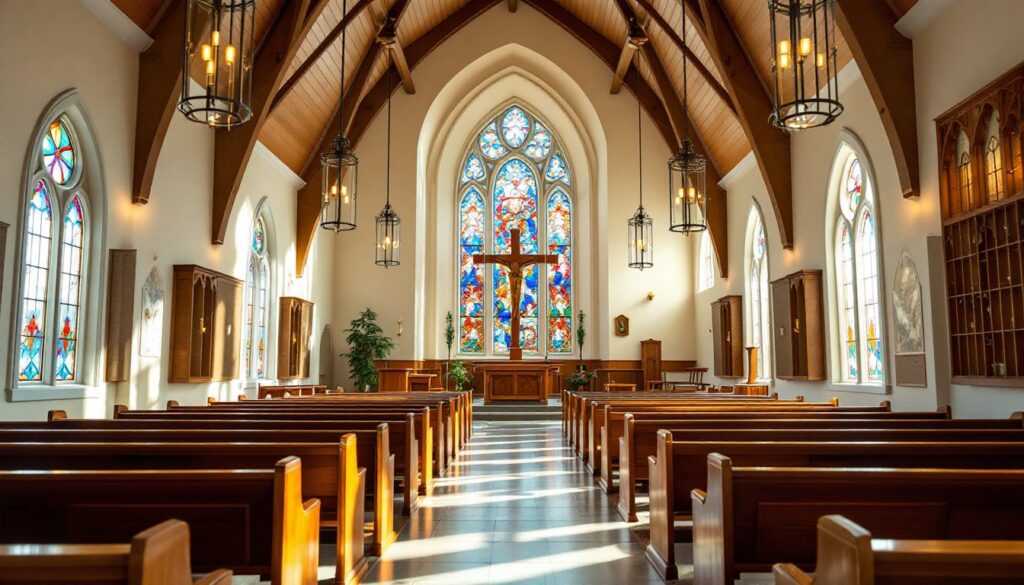
Natural light remains the gold standard. Stained glass filters sunlight into jewel tones that shift throughout the day, creating living color that no artificial system replicates. When adding or restoring windows, balance beauty with glare control, direct sun on screens or in worshipers’ eyes creates discomfort.
Artificial lighting must serve multiple functions: ambient illumination for services, task lighting for reading, accent lighting for art and architecture, and stage lighting for performances. Layered systems with dimmer controls allow adjustment based on time of day and event type. LED fixtures offer energy efficiency and long lifespans, but choose warm color temperatures (2700K–3000K) to avoid the cold institutional feel of daylight-spectrum LEDs.
Avoid direct overhead glare on seating areas. Pendant fixtures, indirect cove lighting, and wall sconces distribute light more comfortably than harsh downlights. Highlight key features, a carved reredos, a baptismal font, a cross, with dedicated accent lights to create visual hierarchy.
Seating Arrangements That Foster Community and Engagement
Seating density, orientation, and comfort shape participation. Pews offer traditional aesthetics and durability, but fixed layouts limit flexibility. Standard pew depth runs 30–36 inches front to back: allow 18–22 inches per person along the length. Cushions improve comfort without major renovation.
Individual chairs provide maximum flexibility. Ganging chairs with interlocking brackets maintains alignment while allowing reconfiguration for different events. Look for stacking chairs rated for 500+ lb. capacity with reinforced frames. Theater-style seating with cup holders and optional tablet arms suits contemporary spaces but can feel too casual for some traditions.
Aisle width affects both accessibility and flow. The International Building Code (IBC) requires minimum 44-inch aisles for accessible routes, wider for higher occupancy. Center aisles help processionals: side aisles improve exits and reduce congestion.
Sightlines matter enormously. Every seat should offer a clear view of the focal point without craning around columns or heads. Gentle floor slopes (1:12 maximum to maintain accessibility) improve visibility in long rectangular spaces. Amphitheater-style curved seating creates intimacy and reduces the perceived distance between front and back rows.
Consider seating capacity realistically. Most churches fill to 70–80% of capacity on average Sundays, with overflow at holidays. Planning for peak attendance while maintaining comfortable spacing for typical weeks requires thoughtful calculation and sometimes multiple service times.
Acoustic Design for Optimal Sound and Music
Poor acoustics undermine even the best sermons and music. Reverberation time, how long sound persists after the source stops, determines clarity. Traditional liturgical music benefits from longer reverberation (1.5–2.5 seconds): contemporary worship with amplified sound requires shorter times (1.0–1.5 seconds) to prevent muddy overlap.
Hard surfaces reflect sound: soft materials absorb it. Acoustic panels mounted strategically on walls and ceilings control reflections without deadening the space entirely. Fabric-wrapped fiberglass panels offer effective absorption in speech frequency ranges. Wood slat panels provide mid-frequency control while maintaining visual warmth.
Ceiling treatments dramatically affect sound distribution. Exposed wood beams scatter sound beneficially: flat drywall creates slap echo. Coffered ceilings, angled planes, and suspended baffles break up parallel surfaces that cause standing waves.
Sound reinforcement systems require professional design in most church spaces. Speaker placement, amplifier power, microphone selection, and digital signal processing must work together. Distributed ceiling speakers suit speech in low-ceiling spaces: line arrays and point-source mains work better for music in larger volumes. Budget for both the initial system and eventual upgrades, technology evolves, and what works today may need replacement in 10–15 years.
Flooring choices impact footfall noise and sound reflection. Carpet absorbs sound and quiets movement but complicates wheelchair access and shows wear in high-traffic zones. Hard surfaces like tile, stone, or finished concrete reflect sound upward, which may require additional ceiling absorption. Luxury vinyl plank (LVP) offers a middle ground, easier to maintain than carpet, quieter than tile.
Practical Tips for Renovating Your Church Interior
Start with a clear vision rooted in congregational input. Survey members about what works and what doesn’t. Observe traffic patterns, note where people naturally gather, and identify pain points, poor lighting, uncomfortable seating, confusing layouts.
Hire design professionals experienced with worship spaces. Church design differs from commercial or residential work. Architects and consultants who understand liturgical traditions, acoustic requirements, and congregation dynamics prevent costly mistakes. Check references from similar-sized churches with comparable worship styles.
Phased renovations spread costs and minimize disruption. Tackle urgent issues, leaking roofs, failing HVAC, code violations, before cosmetic updates. Prioritize improvements with broad impact: better lighting affects every service: new carpet in an underused room can wait.
Establish realistic budgets and add 15–20% contingency for unforeseen issues. Historic buildings especially hide surprises behind walls and under floors. Get multiple bids from licensed, insured contractors. The lowest bid isn’t always the best value, experience with worship spaces and historical construction matters.
Permits and approvals take time. Structural changes, electrical work, and occupancy modifications typically require building permits. Historic landmark designations add review layers. Start permit processes early: delays at city hall can stall entire projects.
Safety equipment is non-negotiable. Contractors should use appropriate PPE, safety glasses, dust masks, hearing protection, and steel-toe boots. If volunteer labor helps with cosmetic tasks like painting, provide the same protection and ensure proper ventilation when using primers and paints.
Protect existing features during construction. Cover stained glass, mask woodwork, and remove or shield artwork. Dust from demolition and sanding infiltrates everywhere, seal off work zones with plastic sheeting and use HEPA-filtered vacuums.
Document the process with photos and detailed notes. Future stewards will appreciate knowing what’s behind walls, under floors, and above ceilings. Keep material samples, paint codes, and product specifications organized for maintenance and future matching.