Table of Contents
ToggleA salon’s interior design isn’t just about aesthetics, it’s a business asset that influences client retention, stylist productivity, and revenue per square foot. The difference between a forgettable walk-in and a fully booked appointment calendar often comes down to layout, lighting, and how the space makes people feel the moment they step inside. Unlike residential design, salon interiors must balance brand identity with strict functional requirements: plumbing runs, electrical loads for multiple styling tools, ventilation for chemical services, and accessibility compliance. This guide walks through the core design decisions that separate thriving salons from empty chairs, with practical strategies salon owners and designers can carry out whether they’re building from scratch or renovating an existing space.
Key Takeaways
- Hairdressing salon interior design directly impacts client retention, stylist productivity, and revenue by influencing first impressions and operational efficiency.
- Proper layout planning with designated wet and dry zones, accessible 48-inch aisles, and strategic station positioning is essential before selecting paint colors or fixtures.
- Stylists require 5,000K–6,500K color temperature lighting at stations to accurately assess hair color, while layered ambient, task, and accent lighting prevents service errors.
- Invest in durable furniture such as hydraulic chairs with steel bases and ceramic shampoo bowls that withstand chemical exposure and constant client use.
- A visually striking reception and waiting area with texture, statement fixtures, and thoughtful retail displays generates organic marketing through social media sharing and improves perceived service quality.
- Plan adequate electrical capacity (at least two dedicated 20-amp circuits per station) and lockable storage for inventory before opening, as retrofitting these elements is significantly more expensive than upfront design.
Why Interior Design Matters for Your Salon’s Success
First impressions form in under seven seconds, and in the salon industry, that snap judgment directly impacts booking rates. A well-designed salon signals professionalism, competence, and value, clients instinctively correlate clean lines and quality finishes with the caliber of service they’ll receive.
Beyond attracting new clients, interior design affects staff retention. Stylists spend 8-10 hours on their feet in the same space: poor ergonomics, inadequate task lighting, or cramped stations lead to fatigue and turnover. Smart design reduces physical strain and creates an environment where talent wants to work, which stabilizes the business.
The layout also determines operational efficiency. A salon with poorly planned plumbing runs might have shampoo bowls 40 feet from styling stations, adding minutes to every service. Over hundreds of appointments monthly, those wasted steps compound into lost revenue and client frustration.
Finally, memorable design generates organic marketing. When clients photograph their new cut in a visually striking space and share it on social media, the salon gains free exposure. This isn’t about gimmicks, it’s about creating authentic moments worth documenting, which requires intentional design choices in color, texture, and focal points.
Essential Layout and Space Planning Strategies
Before selecting a single paint color or light fixture, the floor plan determines whether the salon functions smoothly or fights against itself. Start by mapping wet and dry zones. Wet areas, shampoo stations, color processing areas, and cleanup sinks, require dedicated plumbing and slip-resistant flooring (porcelain tile rated for wet commercial use or luxury vinyl tile with textured finish). Dry areas, cutting stations, styling zones, reception, can use wider material options but need adequate electrical capacity.
Most building codes require at least one ADA-compliant styling station and accessible routes throughout the salon. Aisles between stations should be a minimum of 48 inches wide to accommodate wheelchairs and allow staff to pass clients comfortably. Tighter spacing feels cramped and violates accessibility standards.
Place the reception desk with clear sightlines to the entrance and styling floor. Receptionists need to greet arrivals, monitor the waiting area, and signal stylists when clients arrive, impossible if walls or partitions block views.
Storage often gets shortlipped in initial designs, then becomes a clutter problem six months post-opening. Plan for lockable storage for color inventory, retail products, and stylists’ personal tool kits. A salon doing 200 services weekly needs significant back-stock space: skimping here leads to products stacked in corners or blocking emergency exits.
Optimizing Station Arrangement and Client Flow
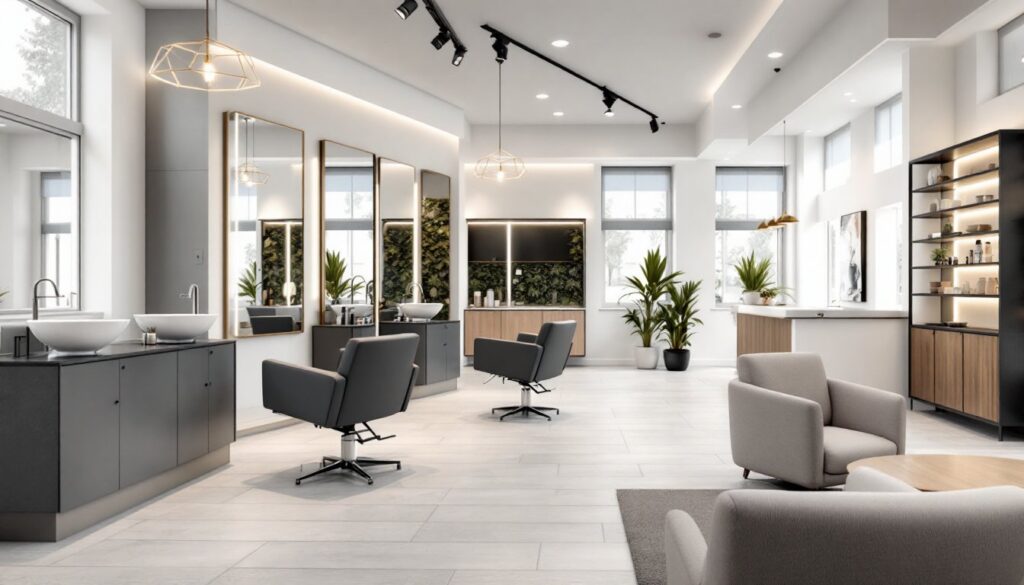
The most efficient station layouts position mirrors along walls with styling chairs facing outward, creating natural aisles down the center. This arrangement maximizes usable square footage and gives clients privacy without requiring full partitions.
Spacing between stations should be 5–6 feet center-to-center. Closer than that, and stylists bump elbows or tangle cords. Hair dryers, flat irons, and clippers running simultaneously create serious electrical draw, verify that each station has at least two dedicated 20-amp circuits to prevent breaker trips during peak hours.
Shampoo bowls belong in a semi-private zone away from front windows but close enough to styling stations that wet clients don’t drip across the entire salon. A 3:1 ratio (three styling stations per shampoo bowl) works for most full-service salons: barbershops or blow-dry bars need different ratios based on service mix.
Consider traffic patterns during shift changes or busy Saturdays. Clients shouldn’t have to navigate through the color mixing area to reach the restroom, and staff need clear paths to move between stations, storage, and the break room without disrupting services in progress.
Choosing the Right Color Schemes and Lighting
Color selection in salons serves two masters: brand identity and color accuracy during services. Neutral wall tones, soft grays, warm whites, or greige, provide a clean backdrop that doesn’t distort how hair color appears under salon lighting. Vibrant accent walls work if placed strategically (reception, retail displays) rather than directly behind styling stations where they’ll interfere with color judgments.
Lighting is non-negotiable for quality work. Stylists need 5,000K–6,500K color temperature (daylight-balanced) at styling stations to see true hair color, especially when placing highlights or correcting previous dye jobs. Standard warm LED bulbs (2,700K–3,000K) create a flattering ambiance but hide color nuances, leading to corrections and unhappy clients.
Layer three types of lighting: ambient (overhead general illumination), task (focused light at each station), and accent (highlighting retail or architectural features). Recessed LED panels provide even ambient light without harsh shadows: adjustable track lights or swing-arm fixtures at each mirror let stylists direct light exactly where needed.
Dimmer switches add flexibility, bright task lighting during services, softer tones when clients check results or during consultation. Avoid fluorescent tubes: even high-CRI versions flicker subtly and create an institutional feel that contradicts a premium service environment.
Natural light enhances the space but requires control. Large windows bring energy and curb appeal but can cause glare on mirrors and fade retail products. Install UV-filtering window film or adjustable shades (cellular or roller shades in neutral tones) to manage brightness throughout the day.
Selecting Furniture and Fixtures That Balance Style and Function
Salon furniture endures constant use, chemical exposure, and client weights ranging from children to adults exceeding 300 pounds. Hydraulic styling chairs should have a steel or aluminum base (plastic fails quickly), smooth height adjustment, and vinyl upholstery that resists stains and cleans easily. Fabric looks upscale but absorbs hair dye and becomes a maintenance nightmare.
Shampoo bowls come in ceramic or fiberglass. Ceramic bowls cost more upfront but resist chips and staining better over a 10-year lifespan. Verify that the bowl’s backrest angle is adjustable: a fixed uncomfortable angle leads to client complaints and limits who can tolerate the shampoo experience.
Mirrors are the salon’s dominant visual element. Frameless mirrors with polished edges create a modern, seamless look, while framed mirrors add character in vintage or boutique concepts. Position mirrors at 60–65 inches from the floor to center, accounting for seated client eye level. Cheaply made mirrors develop black spots (desilvering) within two years, especially in humid environments, specify mirrors with copper-free backing for longevity.
Retail shelving should be adjustable to accommodate different product sizes and easy to clean (glass or powder-coated metal). Backlit shelving adds drama but requires planning electrical during construction: retrofitting it later costs significantly more.
Reception desks often become statement pieces, floating minimalist counters, reclaimed wood, or high-gloss lacquer. Whatever the aesthetic, ensure the desk has discrete storage for appointment books, payment terminals, and daily paperwork. A cluttered desk undermines even the most expensive design.
Creating an Instagrammable Reception and Waiting Area
The reception area is prime real estate for creating memorable moments clients want to share. This doesn’t mean gimmicky neon signs (though those can work for certain brands), it means intentional design choices that photograph well and reinforce the salon’s identity.
Texture creates visual interest in photos. A living plant wall (real or high-quality artificial), reclaimed wood accent wall, or geometric tile pattern provides depth that flat-painted drywall doesn’t. If budget allows, consider a statement light fixture, an oversized pendant or chandelier draws the eye upward and creates a focal point.
Seating in the waiting area should be comfortable enough for a 15-minute wait but not so lounge-like that people camp out. Armchairs with wooden or metal frames last longer than fully upholstered pieces in high-traffic zones. Arrange seating to encourage interaction or offer privacy, depending on the salon’s vibe, facing chairs create conversation: chairs angled toward magazines or windows offer quiet waiting.
Include a beverage station with coffee, tea, or infused water. This small amenity elevates perceived service quality and gives clients something to do while waiting. Use a compact setup, a small credenza with a single-serve coffee maker and a few glassware pieces, rather than a full coffee bar that consumes valuable square footage.
Retail displays in the waiting area capture clients during downtime. Position products at eye level on clean shelving with adequate lighting (accent LED strips or puck lights). Handwritten or printed descriptions explaining product benefits convert browsers into buyers more effectively than products sitting silently on shelves.
Finally, ensure the Wi-Fi password is visible and the waiting area has accessible outlets for charging devices. These practical touches improve the client experience and keep people comfortable during waits.
Conclusion
Effective salon interior design isn’t about following trends, it’s about creating a functional, attractive space that supports both the business model and the people working in it daily. Prioritize layout and lighting first: those decisions have the longest-lasting impact and the highest cost to change later. Surface finishes, furniture, and decor can evolve as the brand matures, but a well-planned floor plan with proper electrical, plumbing, and workflow will serve the salon for decades. Whether starting from an empty shell or renovating an existing space, invest time in planning before construction begins, it’s far cheaper than fixing poor decisions after the doors open.