Table of Contents
ToggleMountain home interior design isn’t about tossing a moose head on the wall and calling it rustic. It’s about creating spaces that balance the rugged beauty of alpine environments with genuine comfort and livability. Whether retrofitting a ski cabin or building from scratch, homeowners face practical challenges: drafty stone fireplaces that need modern inserts, oversized rooms that feel cavernous without proper zoning, and moisture issues from snow and humidity. Done right, mountain interiors blend durable natural materials, warm layered lighting, and furniture scaled for both intimate evenings and hosting a crew after a day on the slopes. This guide walks through the core elements, material choices, and design strategies that make mountain homes feel cohesive, not like a lodge gift shop exploded.
Key Takeaways
- Mountain home interior design balances rugged alpine beauty with practical comfort by combining durable natural materials, warm layered lighting, and furniture scaled for both intimate gatherings and entertaining larger groups.
- Essential elements of mountain interiors include exposed timber beams, stone focal points, layered textures, and warm earth-tone color palettes that reflect the landscape and create a cohesive, inviting aesthetic.
- Effective zoning strategies using area rugs, floating furniture arrangements, and partial-height dividers help define large open floor plans without compromising sight lines or the airy feel of mountain spaces.
- Mountain modern interior design strips away heavy ornamentation while preserving natural materials and warmth, featuring clean-lined cabinetry, larger window expanses, and refined finishes that suit new builds and major renovations.
- Durable, substantial furniture with solid wood construction and performance-fabric upholstery is essential for mountain homes, while purposeful decor like landscape photography and vintage skiing memorabilia maintains refined rusticity over kitschy theming.
- Warm white LED lighting (2700K–3000K), cellular shades paired with heavyweight drapes, and layered ambient, task, and accent lighting on dimmers are critical for creating the cozy, functional spaces that define successful mountain home interiors.
What Defines Mountain Home Interior Design?
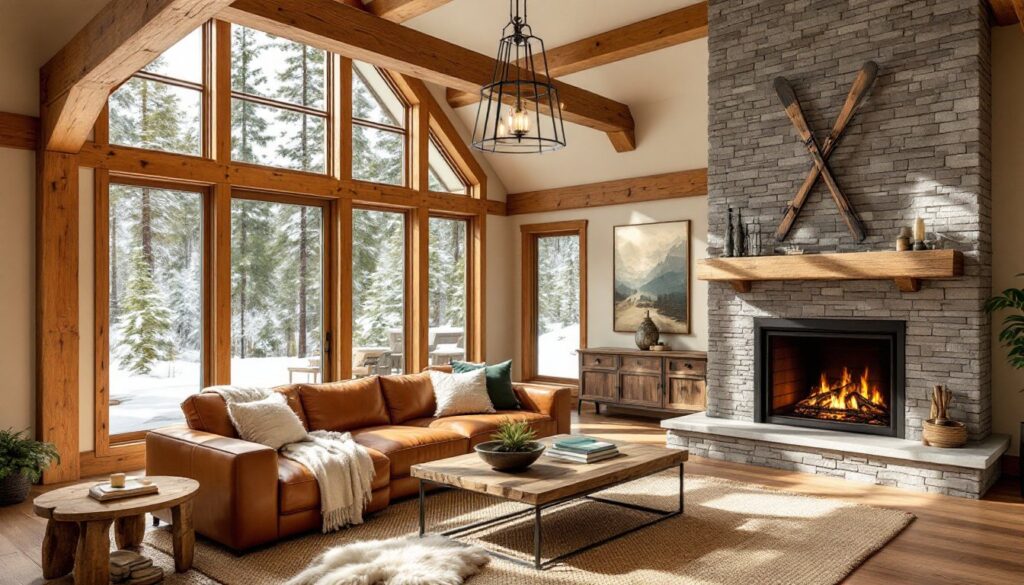
Mountain home interior design, sometimes called alpine or lodge style, draws directly from its environment. The style prioritizes natural materials like reclaimed wood, stone, and metal, reflecting the landscape outside. Unlike coastal or prairie styles that emphasize lightness and airiness, mountain interiors lean into warmth, texture, and shelter from harsh conditions.
Key characteristics include:
- Exposed structural elements: Timber beams, trusses, and posts often remain visible, turning framing into architectural features
- Stone or masonry focal points: Fireplaces built from river rock, fieldstone, or stacked slate anchor living spaces
- Layered textures: Wool throws, leather seating, jute rugs, and linen curtains add tactile depth
- Warm, grounded color schemes: Earth tones dominate, think charcoal, rust, cream, deep greens, and warm grays
The style evolved from practical backcountry lodges and National Park architecture (think Old Faithful Inn or Timberline Lodge), where durability mattered as much as aesthetics. Modern iterations blend those traditional elements with cleaner lines and updated systems, radiant floor heating instead of relying solely on a wood stove, for example.
It’s worth noting that mountain modern interior design is a growing subset. This approach keeps the natural materials and cozy warmth but strips away heavy ornamentation, favoring simpler profiles, larger windows, and a more open floor plan. Both styles work, but understanding the distinction helps homeowners make consistent material and finish choices throughout the project.
Essential Elements of Mountain Interior Style
Natural Materials That Bring the Outdoors In
Mountain interiors rely heavily on locally sourced or reclaimed wood. Common species include:
- Douglas fir and pine: Affordable, widely available, and easy to mill for beams, paneling, or ceiling planks. Nominal 6×6 or 8×8 timbers work well for exposed posts.
- Reclaimed barn wood or beetle-kill pine: Adds character and patina. Expect to pay $6–$12 per board foot depending on region and finish.
- Cedar: Naturally rot-resistant, ideal for moisture-prone areas like mudrooms or bathrooms.
Stone applications include fireplace surrounds, accent walls, and flooring. Dry-stacked fieldstone offers a classic look but requires skilled masons to ensure stability without visible mortar joints. For DIYers, thin veneer stone (about 1–2 inches thick) can be applied over cement board with thinset mortar and doesn’t require a structural footing, check local building codes for ledger requirements if installing above finished floors.
Metal accents, wrought iron railings, steel light fixtures, or blackened steel fireplace screens, add contrast without softening the overall aesthetic. Avoid shiny chrome or polished nickel: oil-rubbed bronze or matte black finishes suit the style better.
Wood flooring is standard. Wide-plank oak, hickory, or reclaimed heart pine (typically 5–7 inches wide) holds up under foot traffic and snow-dampened boots better than narrow-strip flooring. Install over a moisture barrier if the home sits on a slab or crawl space prone to condensation.
Warm Color Palettes Inspired by Nature
Mountain color schemes pull directly from the surrounding environment, forest greens, stone grays, bark browns, and sky blues. These hues ground the interior and prevent it from feeling too dark, especially in homes with smaller windows or north-facing exposures.
Base neutrals include:
- Warm whites and creams for ceilings and trim (avoid stark white, which reads cold against wood tones)
- Charcoal or slate gray for accent walls
- Soft taupes and tans for larger wall areas
Accent colors might include deep forest green, burnt orange, rust, or navy. Use these sparingly, on a single accent wall, in textiles like throw pillows and blankets, or in artwork.
Paint selection matters more than homeowners think. Low-VOC or zero-VOC paints are essential in tightly sealed mountain homes with limited ventilation during winter months. Matte or eggshell finishes work best on walls: save satin for trim and high-moisture areas.
Lighting also impacts perceived warmth. Warm white LEDs (2700K–3000K) mimic incandescent bulbs and complement wood tones. Cooler color temperatures (4000K+) make spaces feel sterile, which conflicts with the cozy goal of mountain design.
Creating Inviting Spaces in Your Mountain Home
Mountain homes often feature large, open floor plans, great for entertaining but tricky for creating intimacy. Zoning strategies help define areas without chopping up sight lines:
- Area rugs: A 9×12 or larger rug under seating groups anchors the space visually and acoustically (helpful in homes with vaulted ceilings that echo).
- Furniture arrangement: Float sofas and chairs away from walls to create conversation zones. Avoid pushing everything to the perimeter, it makes the room feel like a waiting area.
- Partial-height dividers: A stone half-wall, a two-sided fireplace, or open shelving made from reclaimed timbers separates kitchen from living area without blocking light.
Fireplaces are non-negotiable focal points. If retrofitting an existing masonry fireplace, consider a gas or wood insert rated for the home’s square footage. Inserts dramatically improve heating efficiency (old open fireplaces lose 70%+ of heat up the flue) and reduce drafts. Direct-vent gas units don’t require a traditional chimney and can be installed on interior or exterior walls, useful for adding a fireplace to a bedroom or bathroom.
Window treatments need to balance privacy, insulation, and view. Cellular or honeycomb shades provide excellent R-value (insulating performance) without blocking daylight when raised. Pair with heavyweight linen or wool drapes on a traverse rod for nighttime insulation and blackout capability. Avoid fussy valances or swags, simple panels or no treatment at all suits the aesthetic better.
Layered lighting is critical. Relying on a single overhead fixture leaves spaces flat and shadowy. Combine:
- Ambient lighting: Recessed cans or a central chandelier (antler or wrought iron styles are common, but avoid kitschy versions)
- Task lighting: Swing-arm sconces by reading chairs, undercabinet LEDs in kitchens
- Accent lighting: Picture lights on artwork, uplighting on exposed beams
Install all lighting on dimmers. Flexibility matters when shifting from bright morning coffee prep to evening relaxation.
Modern Mountain Design: Blending Rustic and Contemporary
The mountain modern interior design style has gained traction among homeowners who want the warmth of traditional alpine design without the visual weight. This approach keeps natural materials front and center but refines the execution:
- Clean-lined cabinetry: Flat-panel or slab doors in natural walnut or oak instead of raised-panel or distressed finishes
- Minimal hardware: Integrated pulls or simple bar handles in matte black or brushed stainless
- Larger window expanses: Floor-to-ceiling glass, often with black aluminum frames, maximizes views and natural light
- Neutral palette with bold accents: Stick to whites, grays, and natural wood, then add one or two statement pieces, a vibrant abstract painting or a sculptural light fixture
Structurally, mountain modern homes still use exposed timber framing, but beams are often planed smooth and finished with clear sealers rather than left rough-hewn. Steel tension rods or cables replace ornate iron railings on stairs and lofts.
Flooring leans toward wide-plank engineered hardwood or polished concrete with radiant heat. Both handle moisture better than solid hardwood in climates with freeze-thaw cycles. If choosing concrete, seal it properly, an acrylic or epoxy sealer prevents dusting and staining from wet boots.
Kitchens in mountain modern spaces often feature waterfall-edge islands (where countertop material wraps over the sides) in quartz or leathered granite. Pair with matte or textured tile backsplashes, 3×12 subway tile in charcoal or a stacked stone ledger panel.
This style works especially well for new builds or gut renovations where homeowners can spec modern HVAC, electrical, and plumbing from the start. Retrofitting an older cabin into mountain modern requires careful planning, exposed ductwork or conduit can look intentional if done right, but sloppy runs ruin the clean aesthetic.
Furniture and Decor That Completes the Look
Mountain interiors demand durable, substantial furniture. Lightweight pieces look out of place and won’t hold up to heavy use. Focus on:
- Solid wood or timber-frame construction: Look for mortise-and-tenon joinery, not particle board with veneer
- Upholstery in performance fabrics: Leather, heavyweight linen, or synthetic blends like Crypton resist stains and wear
- Deep seating: Sofas and chairs with generous cushions (at least 22–24 inches deep) invite long evenings by the fire
Scale matters. A sectional that feels huge in a suburban living room might look proportional in a great room with 18-foot ceilings. Conversely, dainty side tables or spindle-leg chairs disappear against massive stone fireplaces and timber beams.
Decor should be purposeful, not cluttered. Instead of filling shelves with tchotchkes, display:
- Vintage skis, snowshoes, or climbing gear mounted on walls
- Black-and-white landscape photography in simple wood or metal frames
- Antler sheds (ethically sourced) or driftwood as sculptural elements
- Handwoven baskets for blanket storage
Textiles add warmth without visual clutter. Layer wool or faux-fur throws over seating, use linen or flannel bedding, and choose rugs with low-profile weaves (flatweave or low-pile) that won’t trap dirt and pine needles.
Avoid anything overly themed, wildlife-print shower curtains, bear-shaped toilet paper holders, or “Welcome to the Cabin” signs cheapen the aesthetic. The goal is refined rusticity, not a theme park.
Lighting fixtures should feel handcrafted or industrial. Wrought iron chandeliers, Edison-bulb pendants in wire cages, or drum shades wrapped in burlap or linen all work. Avoid anything too ornate, shiny, or traditionally formal (no crystal chandeliers unless going for an eclectic mashup).
Finally, live greenery softens hard surfaces. Potted evergreens, ferns, or succulents in ceramic or stone planters bring life indoors, especially during months when the outdoor landscape is snow-covered and monochrome.