On January 25, 2025, skywatchers will witness a rare celestial event: a stunning alignment of planets. This phenomenon occurs when several planets line up in the sky, creating a breathtaking sight for both amateur astronomers and seasoned stargazers. The alignment promises to offer a unique opportunity to observe the beauty of our solar system in a way that’s not often seen.
As the planets gather in a cosmic dance, excitement builds among enthusiasts eager to capture the moment. Understanding the significance of this alignment can deepen appreciation for the wonders of astronomy. Whether it’s through telescopes or simply gazing up at the night sky, this event is sure to inspire awe and curiosity about the universe.
Overview of Planet Alignment
On January 25, 2025, a rare celestial event occurs with a significant alignment of several planets. This alignment features Mercury, Venus, Mars, Jupiter, and Saturn, which will appear in close proximity to each other in the night sky. Astronomers and skywatchers anticipate a stunning visual display, making this event accessible to all levels of interest in astronomy.
The alignment offers unique opportunities for observation and study. Observers equipped with telescopes can view distinct planetary features, such as Jupiter’s Great Red Spot or Saturn’s rings. Even without expensive equipment, stargazers can enjoy the sight of these planets twinkling brightly against the backdrop of the night.
This gathering of planets occurs due to their relative positions in orbit around the Sun, creating a linear appearance from Earth’s perspective. These types of alignments are infrequent, occurring every few years at different angles and positions, enhancing the excitement around this event. Engaging with astronomy during this alignment potentially fosters a deeper appreciation for the universe and its many wonders.
Significance of January 25, 2025
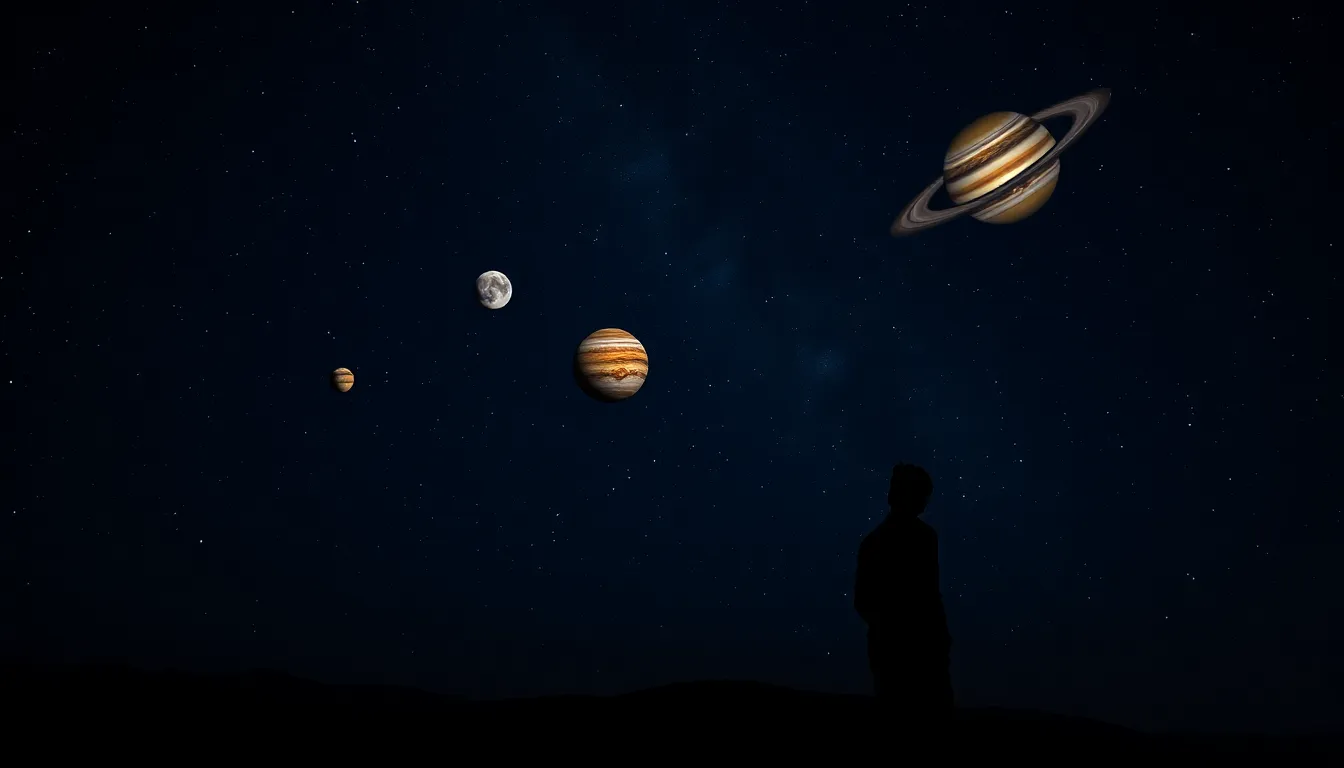
The planetary alignment on January 25, 2025, holds both astrological and scientific importance, drawing attention from enthusiasts and scholars alike. This event not only captivates the imagination but also enriches understanding of celestial dynamics.
Astrological Interpretations
Astrologers often view planetary alignments as significant markers in personal and collective experiences. They interpret this alignment as a time for heightened intuition, potential for new beginnings, and transformative energy. Each planet carries its own symbolism; for instance, Mercury represents communication, Venus signifies love, and Mars embodies action. When aligned, these energies create a unique opportunity for reflection and personal growth. Individuals may feel inspired to align their goals with these cosmic energies, making it a potent time for decision-making.
Scientific Perspectives
From a scientific standpoint, the alignment of Mercury, Venus, Mars, Jupiter, and Saturn offers valuable insights into planetary motion and orbits. Scientists can observe the gravitational influences these bodies exert on each other, facilitating studies on their interactions. The alignment also provides a chance to study phenomena such as gravitational lensing, where light from distant stars bends around massive celestial objects. Such alignments allow astronomers to make precise measurements that contribute to a deeper understanding of the solar system’s structure and dynamics.
Visible Planets and Their Positions
On January 25, 2025, a stunning alignment of Mercury, Venus, Mars, Jupiter, and Saturn will grace the night sky, providing a unique opportunity for observers to pinpoint each planet’s location.
Planetary Locations in the Night Sky
- Mercury: Positioned closest to the Sun, Mercury appears low on the horizon, towards the west just after sunset. Its small size and proximity may make it challenging to spot, but attentive observers can identify its bright glow against the twilight.
- Venus: Known as the “Evening Star,” Venus shines prominently and can be found just above Mercury in the western sky shortly after sunset. Its brilliance makes it one of the easiest planets to locate.
- Mars: Look for Mars a bit higher in the sky, positioned above Venus. Its reddish hue stands out and provides a distinct contrast against other planets.
- Jupiter: As the largest planet, Jupiter will be easily visible towards the eastern portion of the sky. Its brightness will allow observers to see some of its largest moons through a small telescope.
- Saturn: Found to the east of Jupiter, Saturn can be identified by its golden-toned light. Through binoculars or telescopes, observers can glimpse its iconic rings, enhancing the viewing experience.
Best Viewing Practices
- Timing: Observers should aim to witness this celestial event shortly after sunset to enjoy optimal lighting conditions. Viewing earlier in the evening offers the best chance to see all aligned planets without interference from daylight.
- Location: Select locations away from urban light pollution for clearer views of the night sky. Ideal spots include parks, hills, or observatories.
- Equipment: While many planets are visible with the naked eye, a telescope or binoculars can enhance the experience. Telescopes reveal details like Jupiter’s Great Red Spot and Saturn’s rings, providing richer visual insights.
- Weather Conditions: Check local weather forecasts for clear skies. Cloud cover can obstruct views, so choosing a night with good visibility enhances the likelihood of observing the planetary alignment.
- Plan Ahead: Use astronomical apps or star charts to guide observations. These tools help pinpoint specific planetary locations and can enhance the overall viewing experience.
Historical Context of Planet Alignments
Planet alignments have fascinated humanity for centuries, often inspiring both scientific inquiry and cultural mythology. Historical records indicate that ancient civilizations closely observed planetary movements. The Mayans, Egyptians, and Babylonians meticulously documented celestial events, using them to create calendars and provide guidance for agricultural planning.
Significant alignments, such as the Great Conjunction of Jupiter and Saturn in 1603, historically sparked interest among astronomers. This event not only generated excitement in scientific circles but also influenced astrological predictions. Such occurrences often captured the imagination, leading to interpretations regarding potential societal changes or natural disasters.
Astronomical events align with the cycles of the solar system, with notable alignments happening every few years. The arranged positions of planets in the night sky typically reflect the gravitational interactions among them. In 1982, a notable alignment showcased a rare configuration of five planets, heightening public interest in astronomy.
Noteworthy observations of planetary alignments also include the 2000 alignment when five planets appeared in a crescent formation. This prompted increased interest in amateur astronomy, as individuals sought to witness the rare sight. The significance of these alignments lies not only in their visual spectacle but also in the understanding they offer regarding celestial mechanics.
Future alignments, such as the upcoming event on January 25, 2025, are anticipated with similar excitement. Historically, these celestial events provide an opportunity for both scientific study and public engagement with astronomy, reflecting the ongoing human fascination with the cosmos.
Future Planet Alignments to Watch For
Future planetary alignments promise additional awe-inspiring celestial displays. Some notable events to observe include:
- March 15, 2025: Mercury, Venus, Mars, Jupiter, and Saturn will align once again, offering a chance to view all five planets together. This alignment occurs in the early morning sky, making it a stunning sight for early risers.
- June 30, 2028: An alignment featuring Mercury, Venus, Mars, and Jupiter will become visible near sunset. The planets will create a diagonal line across the horizon, enhancing the visual spectacle.
- August 23, 2030: Mars, Venus, Saturn, and Jupiter will produce a striking conjunction, appearing close together in the night sky. Observers can enjoy this sight with minimal light interference in rural areas.
- December 21, 2033: A rare return of a five-planet alignment will occur, generating significant excitement and drawing attention from astronomers and stargazers alike. Visibility will depend on clear weather conditions.
- October 14, 2037: The alignment of four planets, including Jupiter and Saturn, will take place. This event provides an opportunity to use telescopes or binoculars for detailed observations.
Each alignment offers unique advantages for those interested in astronomy. Observing techniques, timing, and locations play crucial roles in enhancing the experience.
Astrophysicists continue to study planetary alignments to better understand their implications on gravitational forces and cosmic events. Each future alignment not only captures public interest but also advances scientific inquiry into planetary motion. The anticipation surrounding these events reflects humanity’s enduring fascination with celestial phenomena.
The planetary alignment on January 25, 2025, presents a unique opportunity for skywatchers to connect with the cosmos. As Mercury, Venus, Mars, Jupiter, and Saturn align, observers can marvel at the beauty of our solar system. This event not only captivates the imagination but also encourages reflection and curiosity about the universe.
With proper planning and the right conditions, individuals can enhance their viewing experience and appreciate the intricate dance of these celestial bodies. The excitement surrounding this alignment echoes humanity’s enduring fascination with the stars. As anticipation builds for this rare occurrence, it serves as a reminder of the wonders that lie beyond our planet.