Table of Contents
ToggleTraditional Indian interior design offers a rich tapestry of color, texture, and craftsmanship that transforms spaces into vibrant sanctuaries. Rooted in centuries of cultural heritage, this aesthetic blends intricate woodwork, bold hues, and handcrafted textiles to create rooms that feel both luxurious and deeply personal. Unlike minimalist trends, traditional Indian style embraces pattern, ornamentation, and symbolism, each element telling a story. Homeowners seeking to incorporate this timeless approach don’t need to overhaul entire rooms: understanding the core principles allows for thoughtful integration that honors authenticity while fitting modern lifestyles. This guide breaks down the essential components, materials, and regional nuances that define traditional Indian interiors.
Key Takeaways
- Traditional Indian interior design emphasizes bold jewel tones, layered textiles, and handcrafted elements that transform spaces into vibrant sanctuaries honoring cultural heritage.
- Incorporate signature features like jali screens, carved wooden elements, and diyas to add authenticity without requiring a complete room overhaul.
- Start with one statement element—such as a hand-painted mural, brass lighting fixtures, or a large dhurrie rug—to test the aesthetic before committing to larger structural changes.
- Choose natural materials including teak or rosewood for furniture, silk and cotton for textiles, and brass or copper for accents, as these age gracefully and maintain authentic character.
- Understand regional variations like Rajasthani bold colors and mirror work versus South Indian dark wood tones to ensure cohesive design rather than mixing incompatible styles.
- Prioritize practical considerations such as weight-rated wall anchors for heavy decor, regular cleaning for intricate jali work, and professional installation for structural modifications.
What Defines Traditional Indian Interior Design?
Traditional Indian interior design is characterized by a layered approach that prioritizes warmth, symmetry, and spiritual harmony. The aesthetic draws heavily from Vastu Shastra, an ancient architectural philosophy similar to feng shui, which dictates spatial arrangement based on directional energy flow. This influences everything from room layout to furniture placement.
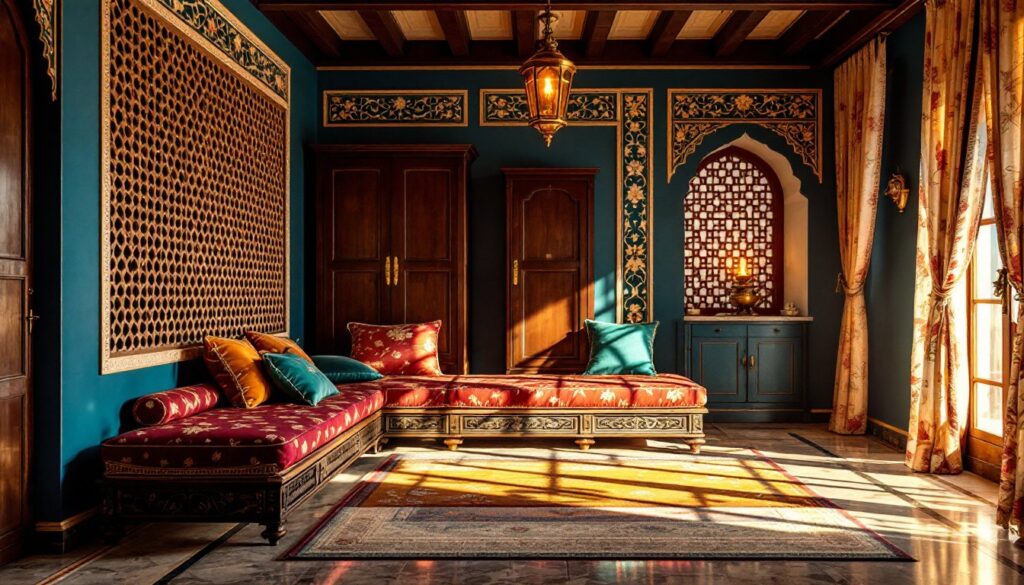
Key defining features include exposed wooden beams, carved pillars (often teak or rosewood), and jali screens, latticed partitions made from wood or stone that allow airflow while maintaining privacy. Arched doorways and niches (called taq) are common architectural elements that add depth and visual interest.
Ornamentation is never an afterthought. Walls often feature hand-painted murals, stenciled borders, or fresco work depicting religious motifs, nature scenes, or geometric patterns. Floors traditionally use kota stone, marble, or terracotta tiles rather than hardwood, providing cooling properties in warm climates.
Lighting plays a ceremonial role. Spaces incorporate diyas (oil lamps), hanging lanterns with colored glass, and brass fixtures that cast warm, diffused light. Natural light is maximized through large windows and courtyards, central to many traditional Indian homes.
The design philosophy rejects empty space. Every corner serves a purpose, whether for a low seating area, a prayer niche, or decorative display. This creates environments that feel abundant and lived-in rather than sparse or staged.
Essential Color Palettes and Material Choices
Traditional Indian interiors employ bold, saturated colors inspired by natural dyes and regional landscapes. Jewel tones dominate: deep ruby reds, sapphire blues, emerald greens, and golden yellows. These aren’t accent colors, they cover entire walls, textiles, and furniture upholstery.
Color carries symbolic meaning. Red represents prosperity and celebration, commonly used in dining areas or entryways. Blue evokes Lord Krishna and provides cooling visual relief. Saffron and turmeric yellow signify spirituality and are frequent in prayer rooms. Gold accents, whether in paint or leaf application, add ceremonial richness.
Wall treatments often use lime-based distemper or clay plasters rather than modern latex paints. These traditional finishes breathe better in humid climates and develop a soft, matte patina. For DIYers attempting this look, mineral-based paints or chalk finishes can approximate the effect, though they won’t replicate the exact texture.
Wood selection is critical. Teak, rosewood, and sheesham (Indian rosewood) are prized for furniture and architectural details due to their durability and rich grain. Lighter mango wood works for decorative pieces. Note that authentic antique pieces often use solid hardwood with mortise-and-tenon joinery, far heavier and sturdier than modern veneer furniture.
Metals include brass, copper, and bronze for hardware, lighting fixtures, and decorative objects. These develop natural patinas over time: regular polishing isn’t traditional. Stone elements, particularly carved marble for tabletops or inlaid flooring, add cool surfaces essential in pre-air-conditioning architecture.
Textiles layer extensively. Expect silk, cotton, and brocade (silk with metallic threads) in upholstery and drapery. Avoid synthetic substitutes when possible: natural fibers age better and maintain the authentic weight and drape these interiors require.
Signature Furniture and Architectural Elements
Traditional Indian furniture favors low seating and multifunctional pieces. The diwan (a backless couch or daybed) serves as seating, sleeping surface, and conversation area. It’s typically built with a solid wood frame and thick cushions or mattresses. Modern versions sometimes add back pillows, but traditional layouts keep them against walls with bolster cushions.
Jhoola (swings) made from carved wood or wrought iron hang in courtyards or covered verandas. These aren’t purely decorative, they’re functional seating that provides airflow in hot weather. Installation requires ceiling joists capable of supporting 300-500 lbs: verify structural capacity before hanging.
Storage pieces include almirahs (large wardrobes) with carved doors and brass hardware, and pitara (blanket chests) often featuring hand-painted designs. These are typically solid wood construction, expect pieces to weigh 150+ lbs even when empty.
Seating options include manjis (low woven cots), floor cushions called gaddi, and charpoys (rope-strung cots). Coffee tables as Westerners know them are rare: instead, low carved wooden platforms or brass trays on folding stands serve for dining and tea service.
Architectural elements define room character:
- Jali screens: Can be retrofitted as room dividers or cabinet door inserts. DIYers can source reproduction panels in wood or MDF with CNC-cut patterns.
- Carved columns: If adding decorative pillars, ensure they’re non-load-bearing or consult a structural engineer. Most are hollow wood or resin replicas.
- Jarokha balconies: Projecting enclosed balconies with ornate brackets, typically require professional installation and may need permits depending on exterior modifications.
Furniture finish tends toward natural wood tones or painted finishes in accent colors. Distressing isn’t traditional, pieces should look well-maintained, not artificially aged.
Handcrafted Textiles and Decorative Accents
Textiles are the soul of traditional Indian interiors. Block-printed cotton from Rajasthan, ikat weaves from Gujarat, and silk brocades from Varanasi each bring distinct regional character. These aren’t used sparingly, expect layered curtains, wall hangings, table runners, and abundant cushions.
Cushion covers and throws often feature zardozi (metal embroidery), mirror work, or kantha stitching (running stitch embroidery). Authentic pieces use hand-stitched techniques: machine-made versions lack the subtle irregularities that give handwork its character.
Rugs typically include dhurries (flat-weave cotton rugs) rather than pile carpets. These are reversible, easier to clean, and cooler underfoot. Size matters, Indian interiors often use larger area rugs (8’×10′ or bigger) that anchor entire seating zones rather than small accent rugs.
Wall textiles serve decorative and acoustic purposes. Tapestries, embroidered panels, or torans (door hangings) made from fabric, beads, or shells add color at thresholds. For hanging, use a rod pocket or decorative rings rather than nails through the fabric.
Decorative accents include:
- Brass or copper vessels: Serving bowls, water pots (lota), or decorative plates displayed on shelves or niches
- Carved wooden boxes: For storing jewelry, spices, or small items
- Temple bells and incense holders: Often brass, these have ceremonial significance
- Miniature paintings: Framed works depicting Mughal or Rajasthani court scenes
Mirrors play a significant role, often with carved wooden or metal frames. The glass itself may be antiqued or beveled. Wall arrangements typically group mirrors with artwork rather than using them as standalone focal points.
Safety note: Hanging heavy textiles or metal decor requires wall anchors rated for the weight. Drywall alone won’t support brass trays or large framed textiles, locate studs or use toggle bolts.
Regional Variations in Indian Design Traditions
India’s regional diversity creates distinct design languages within the traditional aesthetic.
Rajasthani style emphasizes bold colors and mirror work. Expect pink, orange, and red walls with intricate jali screens and carved haveli-style furniture. Jaipur’s blue pottery and bandhani (tie-dye) textiles are signature elements.
South Indian (particularly Kerala) interiors feature dark wood tones, sloped terracotta tile roofs, and extensive use of laterite stone. Furniture tends toward heavier, darker pieces in rosewood or teak. Brass lamps and Tanjore paintings (gold-leaf artwork) are common decorative elements.
Bengali style incorporates terracotta work, often seen in wall plaques or figurines. Colors are more subdued, terracotta reds, whites, and natural wood. Furniture may include carved wooden palkis (palanquins repurposed as seating) and cane-work chairs.
Gujarati interiors showcase embroidered textiles heavily, particularly bandhani and mirror work. Wooden furniture often features bright painted finishes in contrasting colors rather than natural wood tones.
Understanding these regional differences helps homeowners choose cohesive elements rather than mixing incompatible styles. A Kerala-style dark wood interior won’t harmonize well with Rajasthani pink walls and mirror work, pick a regional direction and commit.
How to Incorporate Traditional Indian Style in Modern Homes
Integrating traditional Indian design into contemporary spaces requires selective application rather than complete transformation.
Start with one statement element:
- A carved wooden jali screen as a room divider (easier than structural changes)
- A large dhurrie rug defining the living area
- Hand-painted wall mural in a powder room or accent wall
Layer textiles strategically. Use block-printed curtains, embroidered cushion covers, and a silk throw to add color and pattern without permanent changes. This works in rentals or for homeowners testing the aesthetic.
Modify existing furniture with traditional elements. Add brass hardware to plain cabinets, reupholster a modern sofa with brocade fabric, or top a simple side table with a brass tray. This bridges contemporary and traditional rather than creating jarring contrasts.
Focus on lighting. Swap builder-grade fixtures for brass pendant lights or hanging lanterns with colored glass. Floor lamps with carved wooden bases and silk shades work in living rooms. These changes have high visual impact with moderate effort.
Limit the color palette. Choose two or three jewel tones rather than attempting the full spectrum. Pair them with neutrals like cream, natural wood, or soft gold to avoid overwhelming smaller spaces.
Address practical concerns:
- Heavy carved furniture may scratch floors: use felt pads on solid wood pieces
- Silk and brocade upholstery aren’t pet-friendly: consider cotton alternatives with traditional patterns
- Intricate jali work collects dust: factor in regular cleaning with soft brushes
Know when to hire professionals. Installing wall murals, hanging heavy jhoolas, or modifying doorways for arched openings requires skilled labor. Structural changes (adding niches, moving walls) need permits and potentially engineers if dealing with load-bearing elements.
DIYers can tackle painting accent walls with jewel tones, installing curtain rods for layered textiles, building simple platform seating with cushions, or creating gallery walls with framed textiles and brass mirrors. More complex joinery, metalwork, or structural modifications should go to experienced contractors familiar with the aesthetic.
Conclusion
Traditional Indian interior design transforms homes through deliberate use of color, texture, and craftsmanship. By understanding core principles, layered textiles, carved wood elements, jewel-tone palettes, and regional variations, homeowners can thoughtfully integrate this rich aesthetic. Start with manageable projects like textiles and lighting, ensuring each addition respects the authentic materials and techniques that give this style its enduring appeal.