Table of Contents
ToggleMost garages become a dumping ground for forgotten holiday decorations, rusty tools, and boxes that haven’t been opened since the last move. But with Americans spending more time at home and needing multi-functional spaces, the garage has become prime real estate for workshops, gyms, storage systems, and even side businesses. A well-designed garage interior isn’t just about aesthetics, it’s about reclaiming square footage, improving workflow, and protecting investments in vehicles and equipment. Whether someone’s working with a cramped single-car space or a sprawling three-bay layout, smart design choices can transform chaos into a highly functional zone that actually adds value to the home.
Key Takeaways
- Interior garage design transforms wasted space into functional zones for workshops, fitness, hobbies, and storage, while boosting home value and resale appeal.
- Smart storage solutions like overhead ceiling racks, slatwall systems, and modular cabinets maximize vertical space and reclaim valuable square footage.
- Upgrading flooring with epoxy coating, polyurea, or interlocking tiles improves durability, cleanliness, and the overall appearance of your garage.
- LED shop lights and task lighting eliminate eyestrain and create safer, more efficient work environments compared to standard builder-installed fixtures.
- Zone your garage into dedicated areas (workshop, fitness, hobby, storage) with clear floor markings to maintain organization and prevent clutter from spreading.
- Start small with one improvement—whether flooring, lighting, or wall storage—and build incrementally for sustainable, long-term garage design success.
Why Interior Garage Design Matters More Than You Think
A thoughtfully designed garage does more than house cars. It protects vehicles from temperature swings and humidity that accelerate rust and wear. Organized storage prevents damage to seasonal gear, power tools, and sporting equipment that degrade when piled on damp concrete.
From a resale perspective, buyers notice garages. A cluttered, oil-stained cave signals deferred maintenance. A clean, well-lit space with custom shelving and epoxy flooring suggests a homeowner who takes care of the property. Real estate agents consistently report that organized garages photograph well and help listings stand out.
Functionality matters too. The average homeowner visits the garage multiple times daily. Poor layout means wasted time hunting for tools, tripping over extension cords, or moving one item to access another. Smart zoning, dedicated areas for lawn care, automotive work, sports gear, and seasonal storage, cuts down on frustration and makes projects easier to start and finish.
Smart Storage Solutions That Reclaim Your Space
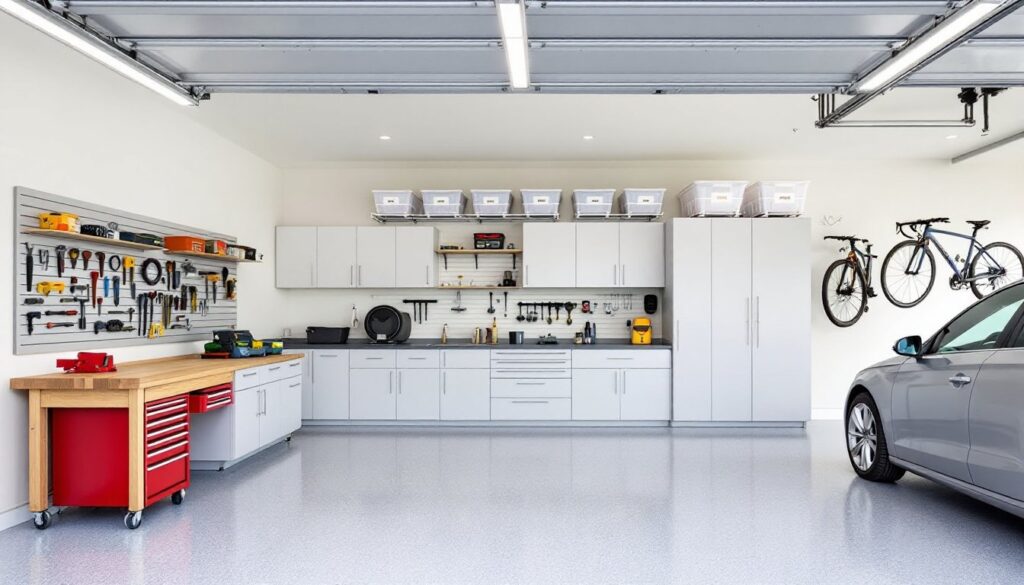
Overhead ceiling racks leverage dead space above parked vehicles. These heavy-duty steel platforms, typically rated for 250 to 600 pounds, mount to ceiling joists and hold bins of holiday decor, camping gear, or rarely used items. Make sure to locate joists with a stud finder and use lag bolts rated for the load, drywall anchors won’t cut it.
Slatwall and track systems turn vertical wall space into customizable storage. Slatwall panels (usually 4×8-foot sheets of PVC or MDF with horizontal grooves) accept hooks, baskets, and shelves that reposition in seconds. Track systems like rail-and-bracket setups offer similar flexibility and can handle heavier loads like bikes or ladders.
Modular cabinets bring garage storage into the 21st century. Steel or plywood cabinet systems with adjustable shelves keep small parts, chemicals, and power tools dust-free and organized. Stainless steel or powder-coated finishes resist humidity better than particle board. For serious tool collectors, a cabinet system with a built-in workbench and pegboard backsplash creates a compact command center.
Mobile bases and rolling carts add flexibility. A table saw or workbench on locking casters can shift to the center of the floor for a big project, then roll back against the wall. Tool chests on casters bring wrenches and screwdrivers to the car instead of running back and forth.
Don’t overlook vertical bike racks and wall-mounted hangers. Bikes occupy minimal floor space when hung by the front wheel or suspended from ceiling hooks. Sports gear, kayaks, skis, surfboards, also stores vertically or overhead with dedicated racks designed to spread load across multiple joists.
Flooring Options That Combine Durability and Aesthetics
Bare concrete soaks up oil, stains easily, and generates dust as the surface degrades. Upgrading the floor improves appearance, simplifies cleaning, and protects the slab.
Epoxy coating remains a DIY favorite. Two-part epoxy resins bond chemically to concrete, creating a hard, glossy surface that resists most automotive fluids. Coverage runs about 250–300 square feet per gallon for two coats. Surface prep is critical: grind or etch the concrete with muriatic acid, fill cracks with concrete patching compound, and let everything cure completely. Broadcast decorative flakes into wet epoxy for texture and slip resistance. Epoxy works best in climate-controlled garages: extreme temperature swings can cause delamination in unheated spaces.
Polyurea and polyaspartic coatings cure faster than epoxy, often within 24 hours, and tolerate a wider temperature range during application. They’re more UV-stable, so they won’t yellow in garages with windows. Professional installers favor these products, but DIY kits are available. Expect to pay more per gallon than epoxy.
Interlocking floor tiles install without adhesives or coatings. Rigid PVC or polypropylene tiles snap together over existing concrete, even if it’s cracked or stained. Perforations or raised patterns allow water and debris to drain underneath. Tiles can be pulled up for seasonal layouts or to access floor drains. They’re pricier per square foot than coatings but require zero cure time.
Peel-and-stick vinyl tiles or rollout mats offer budget-friendly alternatives for light-duty use. They won’t stand up to floor jacks or metal workbenches dragged across them, but they’re fine for fitness areas or general storage zones.
Wall Organization Systems for Maximum Efficiency
Walls offer the largest untapped storage area in most garages. Effective systems keep tools visible, accessible, and off the floor.
Pegboard is the classic choice. Quarter-inch tempered hardboard with evenly spaced holes accepts metal hooks, bins, and tool holders. Mount pegboard to 1×3 furring strips behind the panel so hooks have clearance to slide in. Paint pegboard or choose pre-finished panels to match the space. While pegboard is affordable and versatile, hooks can fall out when tools are removed quickly.
French cleat systems provide heavy-duty, reconfigurable storage. A French cleat is a board ripped lengthwise at a 30- or 45-degree bevel. One cleat mounts horizontally to wall studs: the mating cleat attaches to shelves, cabinets, or tool holders that hook onto the wall cleat. This system handles serious weight, lumber racks, compressor shelves, even full cabinets, and components swap out without new fasteners.
Magnetic tool strips keep frequently used hand tools, screwdrivers, pliers, wrenches, within arm’s reach above a workbench. Industrial-strength magnetic bars hold several pounds each and install with screws or heavy-duty adhesive.
Grid wall panels (wire grid or welded steel mesh) accept a wide variety of hooks and brackets. Powder-coated steel grid resists rust better than pegboard and supports heavier loads. It’s common in retail displays, so aftermarket accessories are abundant.
For long-handled tools, rakes, shovels, brooms, wall-mounted tool racks with spring-loaded clips or adjustable hooks beat leaning them in a corner. Position these racks near the garage door for quick access when heading to the yard.
Lighting Design to Brighten Your Workspace
Poor lighting leads to eyestrain, mistakes, and accidents. Most builders install a single incandescent fixture per bay, barely enough to see the oil drain plug, let alone match paint or read a tape measure.
LED shop lights have replaced fluorescent tubes as the go-to upgrade. Linkable 4-foot LED fixtures rated at 4,000 to 5,000 lumens each provide bright, even light and consume a fraction of the power. Mount them in rows parallel to where vehicles park, or run them perpendicular for better coverage across work zones. Color temperature matters: 4,000–5,000 Kelvin (neutral to cool white) renders colors accurately for detail work, while warmer tones feel less clinical.
Task lighting supplements overhead fixtures. Adjustable LED clamp lights or magnetic rechargeable work lights attach to hoods, toolboxes, or metal shelves for close-up work. Under-cabinet LED strips illuminate workbench surfaces and eliminate shadows.
Motion sensors or vacancy sensors save energy and add convenience. Walking into a well-lit garage beats fumbling for a switch with arms full of groceries. Install sensors on a slight delay so lights don’t shut off mid-project if someone stays still too long.
Make sure circuits can handle the load. Modern LED fixtures draw minimal current, but if adding multiple lights, a space heater, and power tools, verify the garage circuit breaker is rated appropriately, 15 or 20 amps is typical for garage circuits per NEC guidelines. If in doubt, consult an electrician before overloading a shared circuit.
Multi-Purpose Garage Layouts: From Workshop to Home Gym
Single-use garages waste potential. Zoning transforms square footage into multiple functional areas.
Workshop zone: Dedicate a corner or wall to a sturdy workbench, 2×4 framing with a ¾-inch plywood or hardwood top handles abuse and stays flat. Add a bench-mounted vise, pegboard or French cleats above for hand tools, and a power strip with USB ports for charging batteries. A rolling tool chest stores precision instruments and fasteners. If space allows, position stationary tools, table saw, drill press, miter saw, along adjacent walls with enough clearance for stock to feed through.
Fitness area: Rubber gym mats or interlocking foam tiles cushion the floor and dampen noise. Wall-mounted racks hold dumbbells, kettlebells, and resistance bands. A fold-down squat rack or wall-mounted pull-up bar saves space when not in use. Gyms generate sweat and humidity, so improve ventilation with a fan or open windows. Insulating garage walls and adding a ductless mini-split makes winter and summer workouts tolerable in extreme climates.
Hobby and craft space: A dedicated table with task lighting and nearby storage for supplies keeps projects contained. Slatwall or pegboard organizes cutting mats, rulers, and tools. If working with paint, solvents, or adhesives, ensure adequate ventilation, a box fan in a window exhausting fumes outdoors meets basic safety needs.
Seasonal storage zone: Ceiling racks or high wall shelves isolate items used once or twice a year. Clear plastic bins with labels make it easy to spot Halloween decorations or ski gear without digging through cardboard boxes.
Use floor markings or area rugs to visually define zones. Painter’s tape or epoxy paint in contrasting colors delineates parking boundaries, work areas, and storage footprints. This keeps the space organized and prevents clutter creep.
Conclusion
A well-designed garage interior doesn’t happen by accident. It requires honest assessment of how the space gets used, strategic investment in durable materials, and commitment to keeping systems maintained. Start with one zone, flooring, lighting, or a single wall of storage, and build from there. Small improvements compound quickly, and within a few weekends, that neglected garage transforms into one of the hardest-working rooms in the house.