Table of Contents
ToggleThe 2000s gave American homes an unmistakable aesthetic: warm terracotta walls, heavy wood furniture, and the kind of rustic charm that made every suburban living room feel like a countryside villa in Italy. Tuscan interior design wasn’t just popular, it was everywhere, from HGTV marathons to newly built McMansions. The style promised Old World romance and Mediterranean warmth, and homeowners embraced it with enthusiasm. But what exactly defined this trend, and why did it resonate so deeply during that decade? Understanding 2000s Tuscan design means looking at specific materials, color schemes, and cultural factors that turned this aesthetic into a defining look of early 21st-century American interiors.
Key Takeaways
- Tuscan interior design in the 2000s featured warm earth tones, textured walls, exposed ceiling beams, and heavy wood furniture that created spaces resembling Italian countryside villas in American homes.
- The defining color palette of 2000s Tuscan design included terracotta, burnt orange, golden yellows, and olive green accents paired with neutral creams and beiges to achieve Old World warmth.
- Materials like travertine tile, tumbled marble, hand-scraped hardwood, and wrought iron ironwork were essential to authentic 2000s Tuscan interior design, chosen specifically for visible texture and variation rather than uniformity.
- Television home improvement shows, the mid-2000s housing boom, and growing interest in European travel and wine culture drove Tuscan design’s widespread popularity as the dominant American home aesthetic.
- Modern interpretations of Tuscan design have shifted to lighter palettes, natural wood tones, and minimalist approaches that reference the style subtly rather than replicating the heavy, textured interiors characteristic of the 2000s.
The Defining Characteristics of 2000s Tuscan Interior Design
Tuscan design in the 2000s centered on creating spaces that felt aged, warm, and connected to the European countryside. The aesthetic drew heavily from rural Italian architecture and aimed for an Old World authenticity that felt lived-in rather than pristine.
Key characteristics included textured walls treated with techniques like sponge painting, rag rolling, or Venetian plaster to create depth and variation. Smooth, flat drywall was considered too modern and cold. Homeowners wanted visible texture that caught light differently throughout the day.
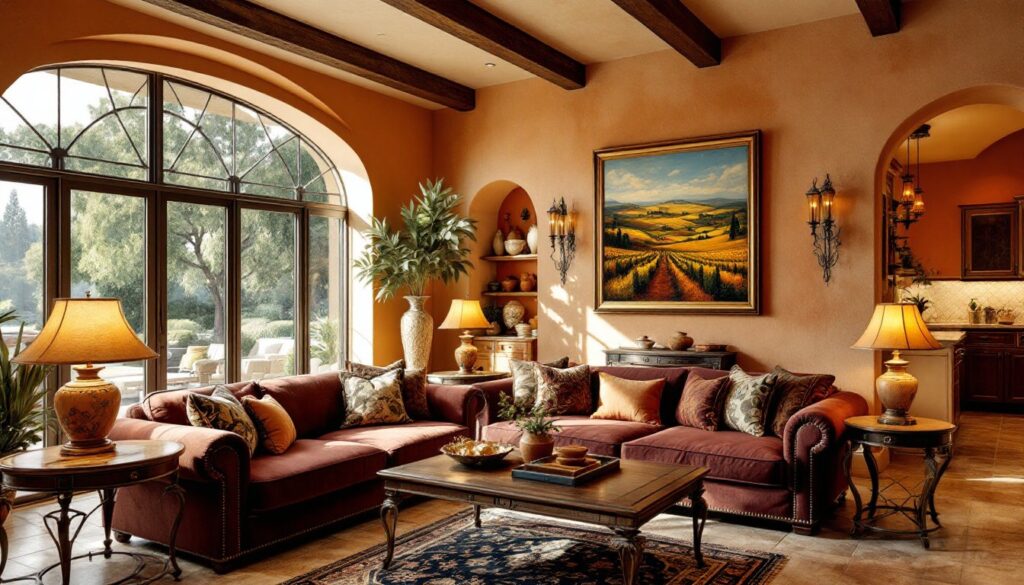
Exposed ceiling beams, or faux beams made from polyurethane, appeared in kitchens, living rooms, and dining areas. These beams, often stained dark walnut or left as natural wood, contrasted against lighter plaster ceilings. Arched doorways and windows replaced standard rectangular openings wherever budgets allowed, adding architectural interest that referenced Mediterranean construction.
Iron work played a significant role. Wrought iron appeared in stair railings, light fixtures, curtain rods, and decorative wall grilles. The metalwork was typically hand-forged or designed to look hand-forged, with visible texture and irregularities that emphasized craftsmanship over industrial precision.
Stone and tile featured prominently on floors and backsplashes. Travertine, tumbled marble, and terracotta tiles were standard choices, often laid in patterns that avoided the grid-like uniformity of contemporary tile work.
The Color Palette That Made Every Room Feel Like an Italian Villa
The 2000s Tuscan color scheme drew directly from the Italian countryside: warm earth tones that mimicked sun-baked clay, aged stone, and Mediterranean vegetation.
Terracotta and burnt orange dominated accent walls and smaller spaces. These shades ranged from soft peachy tones to deep rust, often applied with layered glaze techniques that added visual depth. Paint brands marketed specific “Tuscan” color collections during this period, making it easy for homeowners to achieve the look.
Golden yellows and warm creams served as primary wall colors in larger rooms. These weren’t bright or saturated yellows, they leaned toward ochre and sunflower tones that felt aged and mellow. The goal was warmth without overwhelming brightness.
Deep, saturated accent colors appeared strategically. Olive green showed up in textiles, painted furniture, and tile accents. Deep burgundy and wine red appeared in upholstery, drapery, and decorative accessories. These richer tones provided contrast against the lighter base palette.
Neutral elements balanced the warmer colors. Cream, beige, and taupe appeared in larger furniture pieces, countertops, and flooring. These neutrals weren’t cool-toned grays, they maintained warmth through yellow or red undertones that tied back to the earth-tone foundation.
Woodwork typically received dark stains in walnut, espresso, or cherry rather than natural or light finishes. This created strong contrast against lighter walls and emphasized the rustic, Old World character that defined the aesthetic.
Key Materials and Textures in Tuscan-Inspired Spaces
Material selection in 2000s Tuscan design emphasized natural elements with visible texture and variation. Uniformity was intentionally avoided in favor of surfaces that showed age, weathering, or handcraft.
Stone appeared throughout these interiors. Travertine tile, with its characteristic pitting and variation, covered kitchen floors and bathroom walls. Tumbled marble and limestone provided backsplashes with an aged, softened appearance rather than polished shine. Natural stone varied in color from piece to piece, which fit the aesthetic perfectly.
For countertops, granite in warm tones dominated. Popular colors included variations with gold, rust, and brown movement, such as Giallo Ornamental or Venetian Gold. These patterns added visual interest and tied into the earth-tone palette. Some installations featured slab granite with more dramatic veining as focal points.
Terracotta tile, either authentic or high-quality ceramic replicas, appeared on floors, especially in entryways, kitchens, and sunrooms. The tiles were typically laid in patterns like Versailles or herringbone rather than simple grid layouts. Authentic terracotta tiles showed color variation between pieces, which was considered desirable.
Wood appeared in heavy, substantial forms. Floors were often wide-plank hardwood in darker stains or hand-scraped finishes that showed texture and variation. Ceiling beams, whether structural or decorative, used solid wood or convincing polyurethane replicas that mimicked hand-hewn lumber.
Textiles added softness to otherwise hard surfaces. Heavy, textured fabrics like chenille, tapestry, and damask appeared in upholstery and window treatments. Linen and raw silk provided a more casual texture. These materials were chosen for their substantial weight and visible weave rather than smooth, refined finishes.
Signature Furniture and Decorative Elements
Tuscan-style furniture in the 2000s was substantial, dark, and designed to look aged or hand-crafted. The aesthetic rejected minimalism and contemporary clean lines in favor of pieces with presence and Old World character.
Heavy wood furniture dominated living and dining spaces. Tables, chairs, and cabinets featured thick legs, visible joinery, and dark finishes in walnut or cherry stains. Distressed finishes were common, intentional dings, scrapes, and worn edges that suggested the furniture had been passed down through generations.
Upholstered furniture combined rich fabrics with nailhead trim and carved wood details. Sofas and chairs often featured camelback profiles, rolled arms, and exposed wood frames. The silhouettes referenced traditional European furniture rather than contemporary design.
Decorative elements reinforced the Mediterranean theme:
- Wrought iron candle holders, wall sconces, and chandeliers with amber or frosted glass
- Pottery and ceramics in terracotta, olive green, or hand-painted Italian designs
- Tapestries and wall hangings depicting vineyard scenes, olive groves, or Italian landscapes
- Faux finishes on smaller furniture pieces, including crackle glazes and gold leafing
- Large urns and vessels, often placed on the floor or as table centerpieces
Artwork typically featured Tuscan landscapes, wine bottles, olive branches, or architectural ruins. Framed pieces used heavy wood or ornate gold frames. Metal wall art depicting grape vines, scrollwork, or Mediterranean scenes was popular.
Kitchens incorporated pot racks in wrought iron, open shelving displaying pottery or copper cookware, and tile murals behind ranges featuring Italian countryside scenes or decorative patterns.
Why Tuscan Design Became So Popular in the 2000s
Several cultural and market factors converged in the 2000s to make Tuscan design the dominant aesthetic for American homes.
Home improvement television played a massive role. Shows on HGTV and DIY Network featured Tuscan makeovers regularly, providing step-by-step guidance on achieving the look. The aesthetic photographed well and created dramatic before-and-after transformations that made compelling television.
The housing boom of the mid-2000s meant new construction and renovations were happening at high volume. Builders and developers offered “Tuscan” or “Mediterranean” packages in new subdivisions, making the style accessible to mainstream buyers. Open floor plans in newly built homes suited the style’s emphasis on grand, flowing spaces.
Travel and lifestyle aspirations influenced design choices. The 2000s saw increased interest in European travel and wine culture. Tuscan design offered a way to bring that lifestyle home, creating spaces that referenced Italian villas, vineyard estates, and Old World charm without leaving the suburbs.
The aesthetic provided warmth and comfort during a period when many contemporary designs felt cold or minimalist. After years of all-white kitchens and stark modern interiors, homeowners wanted color, texture, and spaces that felt inviting and cozy.
Accessible DIY techniques made the style achievable for average homeowners. Faux painting techniques, widely taught in home improvement stores and on television, allowed anyone to create textured walls without hiring specialists. Decorative accessories were readily available at mainstream retailers like Pier 1 Imports, HomeGoods, and Kirkland’s.
How the 2000s Tuscan Trend Differs From Modern Interpretations
Contemporary approaches to Tuscan or Mediterranean design have evolved significantly from the 2000s aesthetic, reflecting changed tastes and design priorities.
Modern Tuscan-inspired interiors use lighter, more neutral palettes. While earth tones remain present, they’re softer and less saturated. Terracotta might appear as a subtle accent rather than covering entire walls. Creams and whites dominate, with warm tones used sparingly for balance.
Finishes have shifted from heavy, dark stains to lighter, more natural wood tones. White-washed or lime-washed wood has replaced dark walnut. Metal finishes trend toward brushed brass and matte black rather than heavy wrought iron with elaborate scrollwork.
The emphasis on faux finishes and heavy texture has largely disappeared. Today’s interpretations favor cleaner walls with texture provided through natural materials like lime plaster or authentic Venetian plaster rather than sponge-painted effects.
Furniture proportions are lighter. While wood furniture still appears, pieces feature simpler lines, lighter finishes, and less ornamentation. The heavily carved, distressed furniture of the 2000s has given way to cleaner profiles that reference Mediterranean style without replicating it literally.
Modern spaces incorporate more white and negative space, allowing individual Tuscan elements to stand out rather than layering every characteristic into one room. A single terracotta tile accent or natural wood beam makes an impact without overwhelming the space.
The overall approach has moved from literal recreation to subtle reference, capturing the warmth and natural materials of Tuscan design while editing out the heavier, more dated elements that defined the 2000s interpretation.
Conclusion
Tuscan interior design in the 2000s represented a specific moment when American homeowners craved warmth, Old World character, and spaces that felt distinctly different from minimalist contemporary trends. The style’s emphasis on rich earth tones, textured surfaces, heavy wood, and wrought iron created interiors with undeniable personality. While design preferences have evolved toward lighter, more edited interpretations, understanding the 2000s Tuscan aesthetic provides insight into how cultural factors, media influence, and housing markets shape interior design trends, and how those trends inevitably evolve as tastes change.