Table of Contents
ToggleSingapore’s modern luxury interior design scene has evolved far beyond gilded furniture and heavy drapes. Today’s high-end residential spaces balance minimalist sophistication with functional elegance, driven by compact square footage, tropical climate considerations, and homeowners who demand both beauty and performance. The city-state’s unique blend of Asian heritage and cosmopolitan influences creates interiors that feel simultaneously grounded and forward-thinking. This guide breaks down the defining elements, current trends, and practical strategies shaping Singapore’s most impressive homes in 2026.
Key Takeaways
- Modern luxury interior design Singapore prioritizes spatial efficiency and material quality over ornate detailing, with engineered stone and UV-cured flooring built to withstand tropical humidity and compact square footage.
- Biophilic design and sustainable materials—including reclaimed teak, recycled terrazzo, and FSC-certified wood—define contemporary luxury aesthetics while improving indoor air quality in tightly sealed units.
- Smart home integration using centralized platforms like Control4 and Lutron, combined with motorized window treatments and zone-based climate control, reduces energy consumption by 15-25% while remaining architecturally invisible.
- Warm neutral color palettes (greige, warm taupe, creamy off-white) paired with rich textures like fluted wood paneling and brushed brass finishes create visual interest without overwhelming compact residences.
- Effective space planning uses half-height partitions, floating furniture arrangements, and floor-to-ceiling built-in storage to maximize usable area while maintaining open sightlines in 1,100-1,600 sq ft homes.
- Compliance with Singapore’s Building and Construction Authority (BCA) regulations and energy efficiency standards is essential, requiring professional architects or designers familiar with local codes to avoid costly renovation mistakes.
What Defines Modern Luxury Interior Design in Singapore
Modern luxury in Singapore isn’t measured by ornate detailing or excessive square footage. It’s defined by precision, restraint, and materials that perform under tropical humidity while aging gracefully.
The foundation starts with spatial efficiency. With private residential properties averaging 1,100 to 1,600 square feet for condominiums, every inch must work harder. Built-in cabinetry, concealed storage, and multifunctional zones replace standalone furniture. Clean lines and uncluttered surfaces create visual breathing room where physical space is limited.
Material quality trumps quantity. Engineered stone countertops like Caesarstone or Dekton resist heat and moisture better than marble in Singapore’s 80%+ humidity. European oak flooring with UV-cured finishes holds up to air-conditioned environments without warping. Hardware feels substantial, soft-close hinges, solid brass pulls, and tempered glass partitions are standard, not upgrades.
Lighting design separates amateur renovations from professional-grade work. Layered lighting schemes use recessed LED downlights (3000K warm white for living areas), linear cove lighting for ambient glow, and adjustable track lights for artwork. Dimmers on every circuit allow mood control throughout the day. Singapore’s Building and Construction Authority (BCA) Green Mark standards encourage energy-efficient fixtures, making LED integration both practical and eco-conscious.
Key Elements of Contemporary Luxury Aesthetics
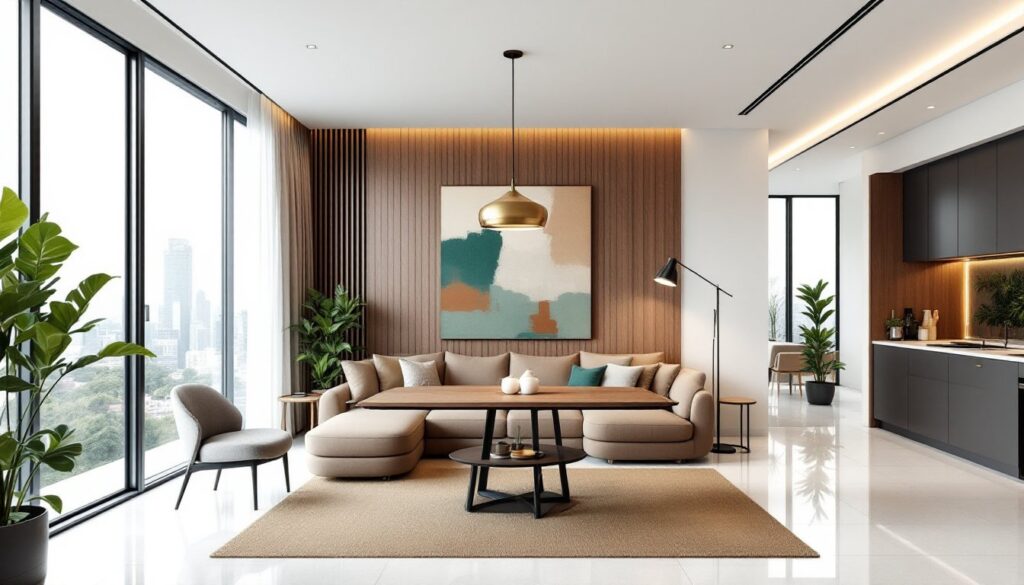
Contemporary luxury aesthetics in Singapore revolve around tactile contrasts and visual coherence. Designers pair smooth, reflective surfaces, polished porcelain tiles, lacquered cabinetry, with textured elements like fluted wood panels, linen upholstery, or textured wallcoverings.
Neutral foundations dominate. Warm grays, soft taupes, and bone whites form base palettes, allowing accent pieces to stand out without visual chaos. Monochromatic schemes work particularly well in smaller spaces, creating seamless transitions between rooms.
Architectural details add depth without bulk. Shiplap wall treatments, coffered ceilings with concealed LED strips, and slim steel-framed partitions define zones while maintaining openness. Crown molding and heavy trim are rare, profiles stay minimal, often just shadow gaps between ceiling and wall planes.
Statement pieces earn their place through function or form, never both. A sculptural pendant light above the dining table, a single oversized artwork, or a designer lounge chair becomes the focal point. Everything else supports rather than competes.
Top Design Trends Shaping Singapore’s Luxury Interiors
Singapore’s luxury design trends in 2026 reflect global movements adapted to local climate and cultural expectations. Two dominant forces are reshaping high-end interiors: environmental consciousness and technological integration.
Sustainable Materials and Biophilic Design
Biophilic design, bringing nature indoors, addresses Singapore’s urban density and limited green space. Interior plant walls using low-maintenance pothos, philodendron, or ferns introduce living elements without extensive upkeep. Automated drip irrigation systems integrated into cabinetry keep greenery thriving in air-conditioned spaces.
Reclaimed and recycled materials gain traction among environmentally aware homeowners. Reclaimed teak from demolished shophouses appears as feature walls or dining tables, each piece carrying visible history through weathered grain and nail holes. Terrazzo flooring made from recycled glass and marble chips offers durability and visual interest while diverting waste from landfills.
Natural fiber textiles, linen, jute, cotton, replace synthetics in upholstery and window treatments. These materials breathe better in humid conditions and soften the hard surfaces typical of modern interiors. Low-VOC paints and formaldehyde-free engineered wood products improve indoor air quality, particularly important in tightly sealed, air-conditioned units.
Certifications matter. Look for FSC-certified wood, GreenGuard-certified furnishings, and Singapore Green Building Product (SGBP) certifications when specifying materials. These aren’t just marketing badges, they indicate third-party verification of environmental and health standards.
Smart Home Integration in High-End Spaces
Luxury homes in Singapore treat smart technology as invisible infrastructure, not showpiece gadgets. Integrated systems control lighting, climate, security, and entertainment through centralized platforms like Control4, Crestron, or Lutron HomeWorks.
Motorized window treatments programmed to solar position reduce heat gain during peak afternoon sun, cutting air conditioning loads by 15-25%. Automated blinds paired with UV-filtering glass protect furniture and artwork from tropical sun damage.
Voice-activated controls through Amazon Alexa or Google Home manage everyday tasks, adjusting lights, setting thermostats, or triggering scenes for dining or movie watching. But physical switches remain. Reliable wall-mounted keypads provide backup control when Wi-Fi drops or guests aren’t familiar with voice commands.
Climate control goes granular. Zone-based air conditioning allows different temperatures in bedrooms versus living areas, with smart thermostats learning occupancy patterns. Dehumidifiers integrate with HVAC systems to maintain 50-60% relative humidity, the sweet spot for preventing mold while keeping occupants comfortable.
Security systems blend into architecture. Concealed door sensors, ceiling-mounted cameras with 4K resolution, and smart locks with temporary access codes for contractors or cleaners provide safety without visible hardware cluttering doorframes.
Color Palettes and Textures for Modern Luxury Homes
Color strategy in Singapore’s luxury interiors balances visual warmth with the need to counter intense exterior heat and light. The most successful schemes layer neutral bases with strategic accent colors and rich textures.
Warm neutrals form the foundation: greige (gray-beige hybrids), warm taupes, and creamy off-whites. These tones work with Singapore’s abundant natural light without feeling stark or clinical. Benjamin Moore’s Balboa Mist or Farrow & Ball’s Skimming Stone exemplify this category, complex enough to avoid flatness but subtle enough to anchor a room.
Accent colors appear in textiles, art, and smaller furnishings rather than walls. Deep emerald greens, burnt terracotta, and navy blues add depth without overwhelming compact spaces. A single accent wall in a muted sage or charcoal works in master bedrooms, but full-room saturation rarely succeeds in smaller Singaporean units.
Texture creates visual interest where color stays restrained. Fluted wood paneling in walnut or oak adds dimension to feature walls without color contrast. Bouclé upholstery on lounge chairs, linen drapery with visible weave, and handwoven jute rugs introduce tactile variety. Matte and gloss finishes on adjacent surfaces, a matte lacquer credenza beside glossy porcelain floor tiles, play with light reflection.
Metallic finishes provide subtle luxury. Brushed brass cabinet pulls, antique bronze faucets, and champagne-finished light fixtures add warmth without the dated look of polished chrome or shiny gold. Black metal frames on windows, doors, and partitions ground spaces and create crisp lines that photograph well.
Stone and engineered stone surfaces bring organic pattern. Book-matched marble slabs on feature walls create mirror-image veining, while terrazzo with large aggregate chips adds color flecks within a neutral matrix. Sintered stone products like Neolith offer marble’s look with superior stain and heat resistance, essential for kitchen islands and bathroom vanities in daily use.
Space Planning Strategies for Singapore Properties
Effective space planning differentiates luxury Singapore interiors from merely expensive ones. With most private residences falling between 1,100-1,600 sq ft and HDB flats ranging from 750-1,400 sq ft, every layout decision carries weight.
Open-concept living remains dominant but requires careful zoning. Rather than removing all walls, strategic half-height partitions or floor-to-ceiling glass panels define kitchen, dining, and living areas while maintaining sightlines. A 1200mm-high storage wall between kitchen and living room provides separation without blocking natural light.
Floating furniture arrangements replace perimeter-hugging layouts. A sofa positioned 600-900mm from the wall creates circulation space and allows floor lamps or console tables behind it. This technique makes rooms feel larger by emphasizing usable center space rather than edges.
Built-in storage maximizes vertical space. Floor-to-ceiling cabinetry in bedrooms eliminates the need for bulky wardrobes, with upper cabinets storing seasonal items and lower sections housing daily-use clothing. Kitchen pantries use pull-out drawers rather than fixed shelves, improving access to items at the back.
Multifunctional spaces earn their keep. A home office doubles as a guest room with a Murphy bed or a daybed with storage underneath. Dining tables extend to seat eight for entertaining but stay compact for daily use. Ottoman coffee tables with lift-top storage hold throws and remotes while providing extra seating.
Corridor and transitional spaces get purposeful. A 1200mm-wide hallway accommodates a shallow 300mm-deep bookshelf or display niche without impeding traffic flow. Mirrors on corridor walls bounce light and create depth.
Ceiling height manipulation adds drama in standard 2.8-3m ceilings. A recessed ceiling in the living area with perimeter cove lighting creates a floating effect. Exposed ductwork painted matte black in industrial-leaning designs adds 200-300mm of perceived height by drawing the eye upward.
Balcony integration extends living areas. Frameless glass sliding doors stack completely open, merging indoor and outdoor zones. Weatherproof porcelain tiles continue from interior to balcony, visually expanding square footage. Outdoor furniture in weather-resistant teak or powder-coated aluminum creates functional outdoor rooms year-round.
Proper planning accounts for Singapore’s Building and Construction Authority (BCA) regulations. Hacking non-load-bearing walls requires approval: structural walls need professional engineers. ACMV (Air Conditioning and Mechanical Ventilation) systems must meet energy efficiency standards. Homeowners tackling major renovations should engage architects or interior designers familiar with local codes, costly mistakes happen when assumptions replace permits.